Frost dates for Xiangyang, China
Half of years have their last spring frost by March 5, but 1 year in 10 still frosts after March 17.
The pale stroke is about 272 days with no frost, in half of years.
From a weather model, not a station; no long record nearby to check it against · A good hunch
How to read this
- The pale stroke is the season with no frost.
- The marked line is when frost is likely: more marks, more likely.
- It reads clockwise from January at the foot, with midsummer at the top.
A frost date is really a percentile, here from 30 years (1991 to 2020) of a weather model’s daily lows near Xiangyang
in about half of years a frost still comes after the median date. Both numbers are below, so you can choose the risk yourself.
The odds
Last spring frost
How often a frost still comes on or after each date.
- 1 year in 10
- March 17
- 1 year in 5
- March 12
- 3 years in 10
- March 10
- 2 years in 5
- March 7
- Half of years (the median)
- March 5
First fall freeze
How often the first freeze comes on or before each date.
- 1 year in 10
- November 17
- 1 year in 5
- November 23
- 3 years in 10
- November 27
- 2 years in 5
- November 28
- Half of years (the median)
- November 30
- Growing season
- about 272 days
- Hardiness zone nearby
- 8b, estimated from the weather model
- Summer days
- a usual high of about 31 °C88 °F
- Lettuce and spinach run to seed
- May to September, in hot, long days (how we know)
Summer heat
Month by month
Each month’s usual high and low at Xiangyang, China
Each month’s usual high and low, 32 °C89 °F to -2 °C28 °F
- January
- high ~8 °C47 °F · low ~-2 °C28 °F
- February
- high ~11 °C53 °F · low ~1 °C33 °F
- March
- high ~16 °C61 °F · low ~6 °C42 °F
- April
- high ~22 °C72 °F · low ~12 °C54 °F
- May
- high ~27 °C81 °F · low ~18 °C64 °F
- June
- high ~31 °C87 °F · low ~22 °C71 °F
- July
- high ~32 °C89 °F · low ~24 °C76 °F
- August
- high ~30 °C87 °F · low ~23 °C74 °F
- September
- high ~27 °C80 °F · low ~19 °C66 °F
- October
- high ~22 °C72 °F · low ~13 °C55 °F
- November
- high ~16 °C61 °F · low ~6 °C43 °F
- December
- high ~10 °C50 °F · low ~0 °C32 °F
From a weather model, not a station; no long record nearby to check it against · A good hunch
The weather model alone, graded A good hunch. Its dates come from the weather model’s square centered 28 km (17 miles) away. The nearest station with dates of its own, Guanghua, is 59 km (37 miles) away, too far to stand in.
If you know your own frost dates, enter them under your place on the Plan, and your plans go by yours, with these shown beside them. See where every city’s dates come from on the coverage map.
Modeled, not measured. No weather station stands behind these dates. They come from ERA5, a reconstruction of the world’s weather from 1991 to 2020 made by ECMWF, Europe’s medium-range weather forecasting agency, for the EU’s Copernicus program, and read here through Open-Meteo. They are the model’s daily lows for the point at 32.25, 112.25, 28 km (17 miles) from the center of Xiangyang. A frost here means a low at or below 0 °C (32 °F).
A weather model sees the land in squares about 25 km (16 miles) across, so it can miss what sets one garden apart from the next: a frost hollow, a hillside, a lakeshore, a city’s own warmth. The Milpa planner reads these same numbers for a garden here and grades them A good hunch.
Cold air also pools in low ground on the clear, still nights when frost happens, so a hollow can freeze while a slope a hundred meters away does not. No table can know that about your garden. A few seasons of your own logged frosts can.
The highs and lows here are the weather model’s. Where a town has a weather station of its own, the model’s daytime highs read about 1.4 °C2.5 °F cooler than the station’s, so a hot stretch may begin sooner and end later than this page shows.
Weather data by Open-Meteo.com, under CC BY 4.0. Contains modified Copernicus Climate Change Service information, 2026.
Dry months from CHIRPS (Climate Hazards Center, UC Santa Barbara), in the public domain, checked against GPCC (Deutscher Wetterdienst), under CC BY 4.0.
Working with these dates
 How to read a planting calendarAnd remember the date itself is a probability
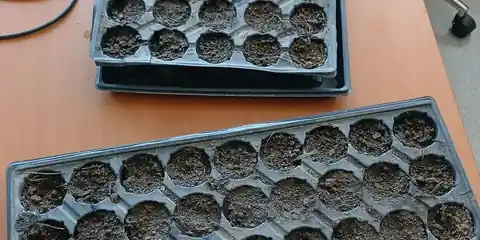 Starting seeds indoorsThe transplant date is still frost-gated
 Floating row covers: frost protection, pest exclusion, and the one ruleThe three things a row cover does
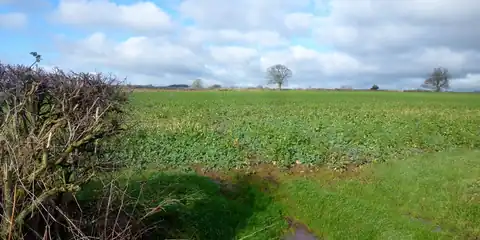 Cover crops and green manure for the home gardenHow to fit one into a small garden
Photo credits
How to read a planting calendar. Photo: Oliver Dixon · CC BY-SA 2.0, via Wikimedia Commons.
Starting seeds indoors. Photo: Furkan Akkurt · CC BY-SA 4.0, via Wikimedia Commons.
Floating row covers: frost protection, pest exclusion, and the one rule. Photo: George Chernilevsky · Public domain, via Wikimedia Commons.
Cover crops and green manure for the home garden. Photo: Jonathan Billinger · CC BY-SA 2.0, via Wikimedia Commons.


What grows here
110 of our 129 plants fit Xiangyang, and 9 more with a little care.
Fits here · 110
Fruiting vegetables · 12, Salad & greens · 10, Roots & tubers · 9, Beans & peas · 9, Onions & garlic · 4, Perennial vegetables · 4, Herbs · 19, Fruit & berries · 21, Flowers · 11, Cover crops & soil builders · 11
Fruiting vegetables · 12
+4 moreShow fewer
Salad & greens · 10
Roots & tubers · 9
Herbs · 19
Fruit & berries · 21
Flowers · 11
+3 moreShow fewer
Cover crops & soil builders · 11
+3 moreShow fewer
Fits with care · 9
Warmer than its usual range, so look for a variety rated for zone 8b (why) · 4
Runs to seed in May to September, so time it to come ready in the other months (why) · 2
Onions bulb by day length: at this latitude, grow short-day onions (why) · 1
Summer nights here run warmer than it sets fruit in (why) · 1
Summer nights here run warmer than it sets fruit in (why) · 1
When lettuce and spinach run to seed here, these summer greens keep growing: Malabar spinach, New Zealand spinach, Amaranth, Sweet potato (why)
Not here · 9
Winters here (zone 8b) are colder than it survives (why) · 9
Nearby cities
The nearest cities with a frost page here, and how their last-frost dates compare.
- Nanyang, Chinalast frost by March 13
- Jianmen, Chinalast frost by February 28
- Xinyang, Chinalast frost by March 7
- Xiantao City, Chinalast frost by February 25
- Wuhan, Chinalast frost by February 17
- Luoyang, Chinalast frost by March 19
Other cities in China.
- Ankang, Chinalast frost by March 7
- Changde, Chinalast frost by February 2
- Zhengzhou, Chinalast frost by March 17
- Wanzhou, Chinafrost in some winters
- Yiyang, Chinalast frost by February 8
- Xi'an, Chinalast frost by March 13
- Lu'an, Chinalast frost by March 7
- Xianyang, Chinalast frost by March 13
When do I plant? · Where the dates come from
More ways Milpa can help
When do I plant? · What grows well together? · What can I plant now? · Something wrong in the garden? · Heard a tip?
With a free account: Plan your garden · Keep a garden diary