A cover crop is a plant you grow to feed the soil. Here's what they do, which kind fixes nitrogen and which just builds organic matter, and how to fit one into a small garden's off-season.
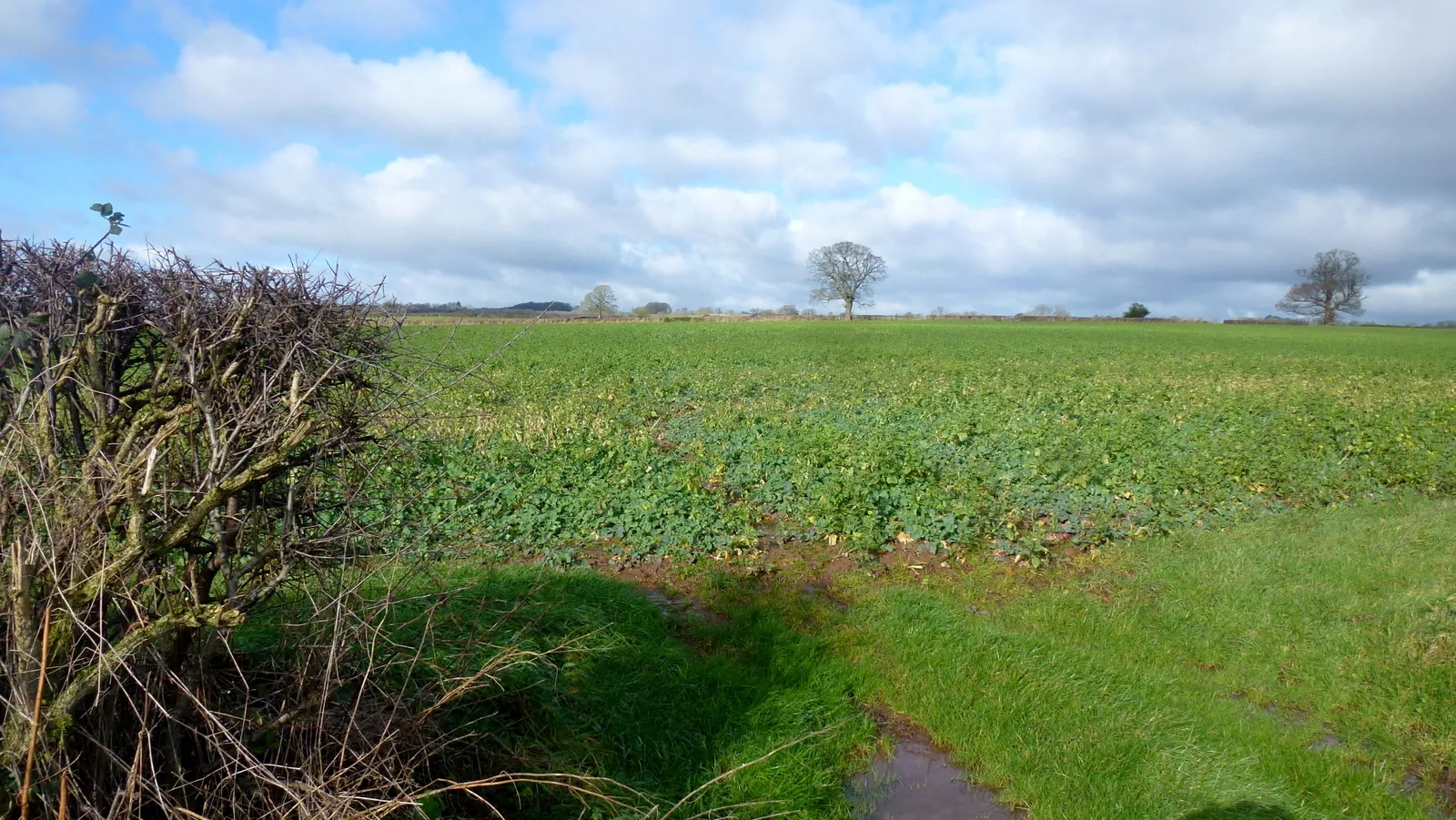
Photo: Jonathan Billinger · CC BY-SA 2.0, via Wikimedia Commons.
What you need
A bed with an off-season or a fallow stretch, somewhere not growing food for a while
Cover-crop seed (a legume for nitrogen, a grass for bulk, or a mix)
The patience to grow a crop you’ll cut down instead of harvest
A cover crop is a plant you grow for the soil. You sow it in a bed that would otherwise sit bare, over winter or through a fallow stretch, let it grow, then cut it down and let it break down in place. Gardeners have done a version of this for centuries under the name “green manure,” and it does several different jobs at once. Which job you get depends on which kind you plant.
Which cover crops add nitrogen?
If what you want is fertility, plant a legume: clover, vetch, field peas, favas. A legume does the same nitrogen-fixing trick a bean does, and then hands it to the soil:
Legume green manure raises available N for the subsequent crop.
If you skip this, it still grows, just less well. The planner suggests it.
How it works: A legume fixes atmospheric nitrogen into its tissue as it grows. When the crop is killed and its residue decomposes, soil microbes mineralize that organic nitrogen, converting a form plants can't use into one they can, and release it for the next crop. How much depends on how well the legume grew, and it is lower on sandy soils.
Evidence: checked against 2 sources in the research-based literature.
The nitrogen credit depends on the amount of crop growth and when the legume was planted. Nitrogen credits are 50 lb N/a lower on sandy, coarse-textured soils.
You grow the legume, cut it down before or as it flowers, and turn it in or leave it as a mulch. As the residue decomposes, the nitrogen the plant fixed is released into the soil for whatever you plant next. This is exactly the “next season” benefit the do beans really feed the corn guide describes. It’s why cover-cropping is the deliberate, effective way to get nitrogen from legumes, where intercropping them beside a hungry crop is not. You’re banking the nitrogen in the ground for the following crop, on purpose.
One practical caveat on new ground. A legume fixes nitrogen only in partnership with its own specific soil bacteria, and a bed that has never grown that legume may not carry them yet. On first-time ground, inoculate the seed.
Beans, peas and other legumes only fix nitrogen with the right soil bacteria. Ground that hasn't grown their kind recently may have too few, so they fix less.
If you skip this, it still grows, just less well. The planner suggests it.
How it works: Nitrogen fixation happens in root nodules formed by Rhizobium or Bradyrhizobium bacteria specific to each legume group. On ground that has not grown that legume group before (a new bed, a soil-less mix, a long gap in the rotation, a fumigated or strongly acid soil), the matching strain can be absent or sparse, so nodulation and fixation are reduced until a population builds.
Evidence: checked against 1 source in the research-based literature.
Rhizobia bacteria are fairly specific as to which legumes they will infect, form nodules on the roots of, and for which they will fix nitrogen
Remedy
On first-time legume ground, coat the seed at sowing with the inoculant matched to the crop's group (garden peas and beans, soybean, and clover each take a different one). Ground that has grown that legume recently usually needs none. It is a cheap one-time step, advised where the history is absent and never required.
Not every cover crop is a legume. The non-legumes earn their place doing everything except adding nitrogen:
Grasses (cereal rye, oats, buckwheat) grow fast and add a lot of organic matter, and their roots hold soil against winter erosion. They do not fix nitrogen. A heavy grass residue can even briefly tie some up as it breaks down.
Deep-rooted crops, tillage radish and the like, punch channels through compacted ground.
Any dense cover smothers weeds by occupying the ground they’d otherwise take, and feeds the soil life through the winter.
So pick by the job: legumes for nitrogen, grasses for bulk and erosion control, a mix for both.
How do I fit a cover crop into a small garden?
The catch in a home garden is space. A cover crop asks you to give up growing food in a bed for the time it’s in. The usual answer is to use the off-season:
1. After you pull a summer crop in late summer or fall, sow the cover crop into the cleared bed. 2. Let it grow through fall (and, depending on the type and your winter, either die back in hard cold or overwinter and resume in spring). 3. A few weeks before you want to plant, cut it down and turn it in or leave it as mulch. Then wait two to three weeks before planting, because fresh residue ties up a little nitrogen as it first breaks down.
Pick a type suited to your winter. Some cover crops die back on their own in cold (“winter-killed”), which saves you cutting them, while others survive and need turning under in spring.
What can't a cover crop do?
A cover crop costs a bed a season. In a tiny plot where every bed is always full, there may be no room for one, and that’s a real trade-off. It also doesn’t replace a soil test. It improves soil broadly and won’t correct a specific deficiency, and the soil test is still how you learn what your ground needs. Where you do have a bed and a spare season, though, a green manure is one of the cheapest ways to build soil there is. It also slots straight into a rotation; the crop rotation guide covers sequencing a legume ahead of a hungry crop.
Further reading
Good places to read more about the technique on this page. The grade on each card comes from that card’s own sources.