The most repeated fact about the Three Sisters, that the beans fix nitrogen to feed the corn beside them, is half true, and the wrong half is the one people rely on. Here's what happens.
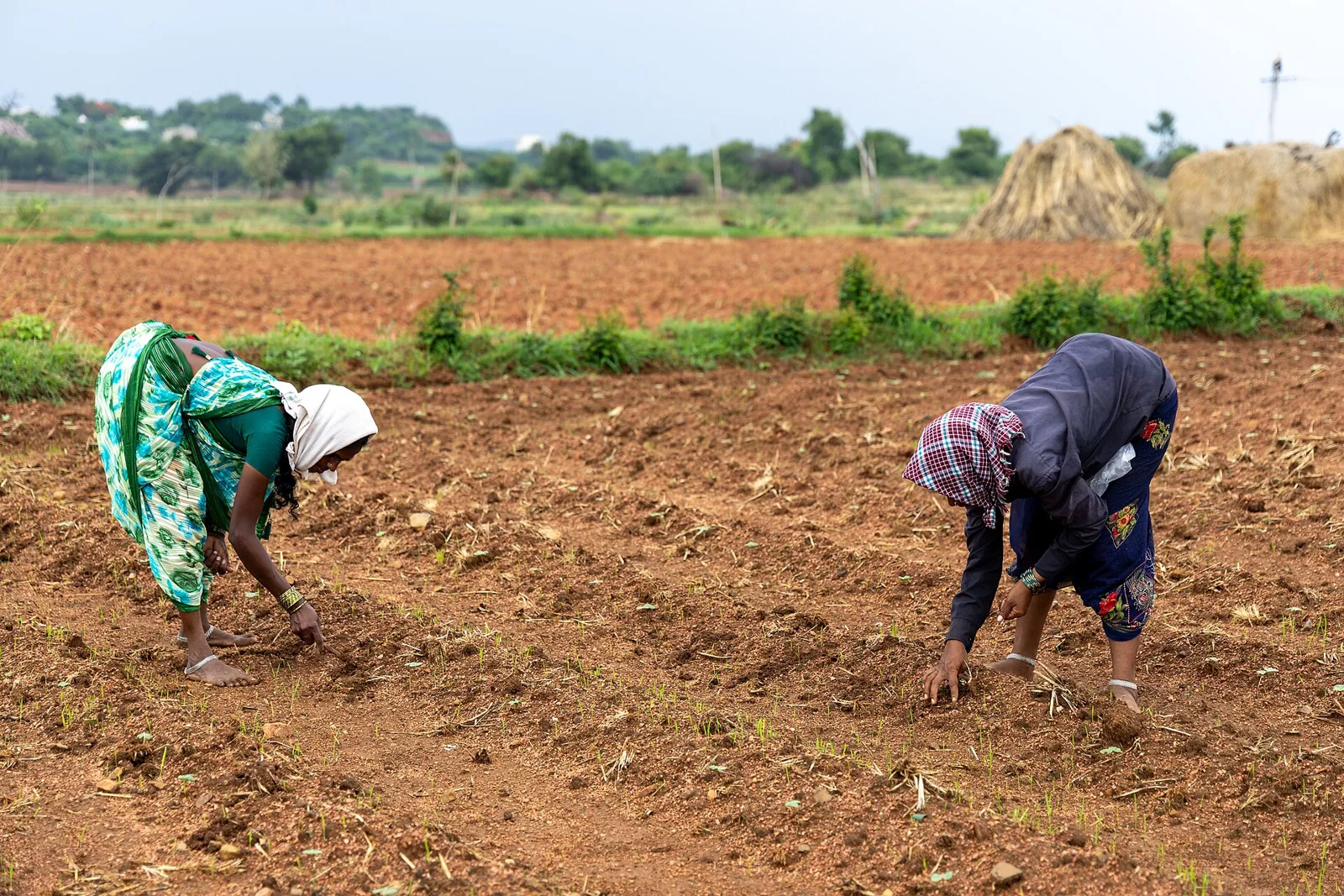
Photo: Vraj Acharya, WELL Labs · CC BY-SA 4.0, via Wikimedia Commons.
What you need
A willingness to hold onto a beloved garden fact a little more loosely
The distinction between “this season” and “next season.” It’s the whole answer.
Almost everyone who has heard of the Three Sisters has heard the reason it’s supposed to work: the beans fix nitrogen from the air and feed it to the corn growing beside them. It’s the most repeated fact in polyculture gardening, and it is half right. The wrong half is the one gardeners count on, that this year’s beans are fertilizing this year’s corn. They mostly aren’t.
Do the beans feed the corn the same season?
The corpus carries this one as a refutation, because the popular version overpromises.
Beans fix nitrogen that feeds the corn growing beside them, that season.
This claim only partly holds up. The planner won’t plan around this claim. What is known instead is below.
What is known: Rhizobia in legume root nodules do fix atmospheric N. Most of it is incorporated into the legume's own tissue. Some does move to a neighboring non-legume the same season via direct root contact and rhizodeposition, but the amount is small (a few percent of the neighbor's N uptake) and does not meet a heavy feeder's demand. The bulk of the benefit arrives the following season, after residues decompose.
Evidence: checked against 3 sources in the research-based literature.
Most of the nitrogen converted by the beans will not be available to the corn and pumpkins the first year; the bean roots have to break down to release nitrogen. Corn is a heavy nitrogen [feeder].
Beans really do fix nitrogen. Bacteria in nodules on their roots pull it from the air. Most of that nitrogen goes into the bean plant’s own leaves, stems, and seeds, because the plant fixed it for itself. Only a small amount reaches a neighbor the same season, through direct root contact and material shed from the roots, and “small” here means a few percent of what a hungry crop like corn needs. Corn is a heavy feeder, and a few percent doesn’t feed it. The real gift arrives next season, once the bean’s residues break down in the soil and release their nitrogen.
Then why grow beans and corn together at all?
Because the Three Sisters is a brilliant design for other reasons. The corn gives the beans a living pole to climb, so you get a vertical crop without building a trellis. The beans’ vining habit and the corn’s stalks knit the planting together. The squash sprawls across the ground below, its big leaves shading out weeds and keeping the soil cool and moist. Three crops share one patch of ground by using three different layers of space. The Three Sisters mound guide covers how to build and plant one. The nitrogen story is the single oversold part of an otherwise excellent design.
How do beans really help the soil?
If you want beans to reduce what you feed a crop, grow them in that ground the season before it. A legume grown one season, then followed by a heavy feeder the next, leaves its nitrogen-rich residue in the ground for that next crop to draw on. That’s the following-season benefit the rule describes, captured on purpose. It’s a rotation, and the crop rotation guide covers how to sequence it. Intercropping beans with corn gives you the structural benefits above, and rotating beans ahead of corn gives you the nitrogen. They’re two different tools, and the myth credits one with the other’s job.
So what's the takeaway?
Plant the Three Sisters. It’s a real, working polyculture. Plant it for the trellis, the weed suppression, and the clever use of space, and don’t expect this year’s beans to fertilize this year’s corn. If it’s the nitrogen you’re after, put the beans in last year’s bed and the corn in it this year. Beans improve the ground for next season. For more on which garden pairings hold up and which are tradition, see what the evidence says about companion planting.
Further reading
Good places to read more about the technique on this page. The grade on each card comes from that card’s own sources.