A soil test replaces guessing with knowing. Here's what it measures, why no tool should hand you fertilizer numbers without one, and how to take one. The rare piece of garden advice that saves money.
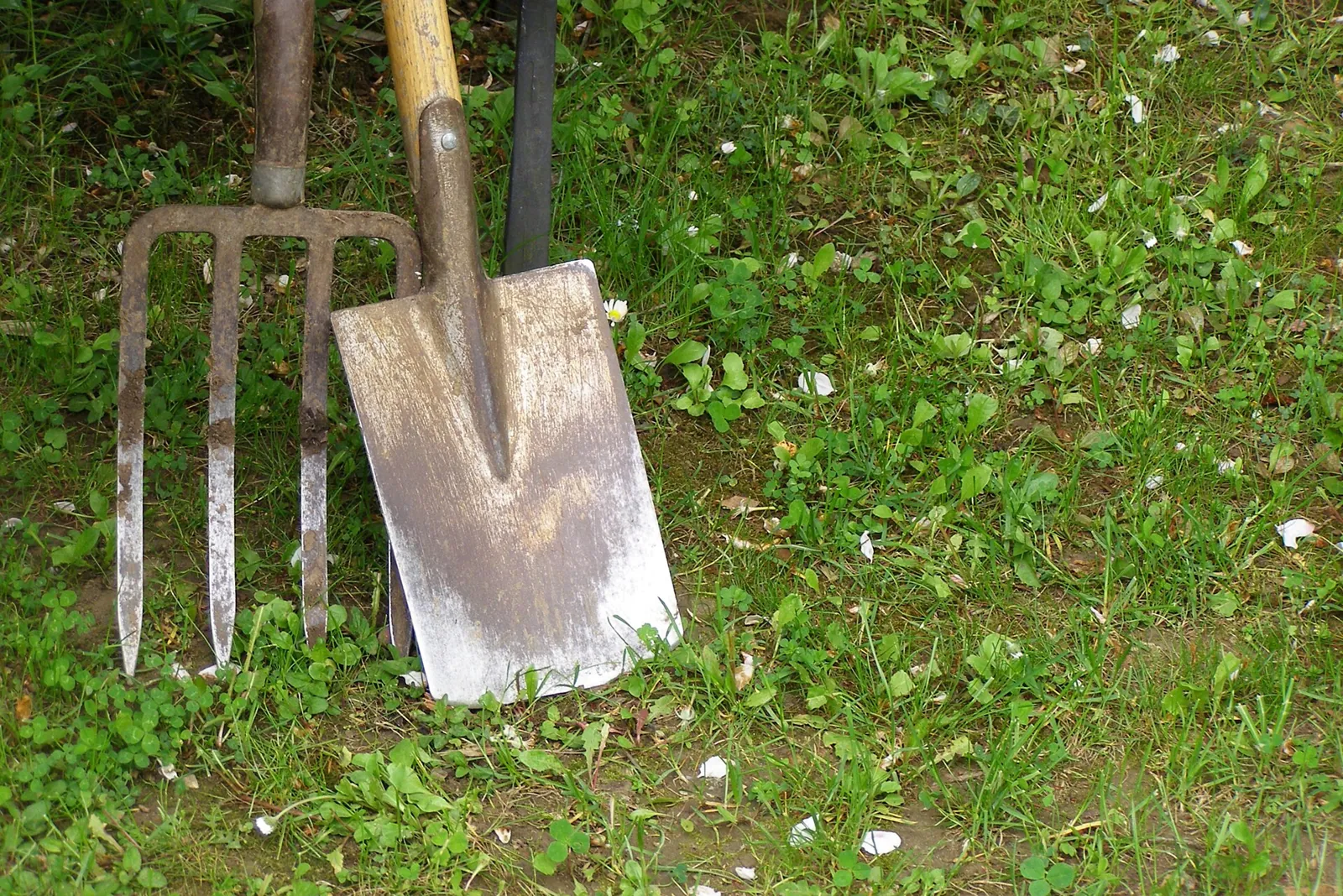
Photo: Erich Ferdinand · CC BY 2.0, via Wikimedia Commons.
What you need
A trowel or spade and a clean plastic bucket
A soil lab. In the US, your county extension office runs the test, usually for about $15. Elsewhere, look for a lab accredited for soil analysis
Ten minutes to take samples, and a couple of weeks to wait for the result
Most garden advice costs you money: buy this amendment, that fertilizer, this bag of stuff. A soil test is the rare piece that saves it. It tells you what your soil has and needs, so you stop buying things it doesn’t. For about fifteen dollars, a US county extension office (or an accredited soil lab anywhere else) will replace a season of guessing with a page of numbers. It is the single highest-value thing a new gardener can do, and this app will keep pointing you at it. Only a lab can know what’s in your soil.
Why can't I just guess at fertilizer?
Every “feed your garden this” recommendation that hasn’t seen your soil is a guess, and this planner will tell you so and not add to the pile:
Fertilizer recommendations without a soil test are guesswork. Say so.
If you skip this, it still grows, just less well. The planner suggests it.
How it works: Whether a soil has enough nitrogen, phosphorus and potassium (N-P-K) depends on the site, and there's no way to know it without a test.
Evidence: settled without a trial (epistemics).
Remedy
We will not invent an NPK number. Your county extension office will test this soil for about $15. Until then, feed heavy feeders, do not feed root crops, and add compost.
Whether your ground is short on nitrogen, phosphorus, or potassium is specific to your site and can’t be known from a distance. Two beds in the same yard can differ. So the engine refuses to make up an N-P-K number, on purpose. A made-up number would be a lie, and the soil test is what turns the refusal into a real answer.
What does a soil test tell me?
A routine test comes back with the numbers you can’t guess:
pH: how acid or alkaline your soil is. It governs whether the nutrients already present are even available to plants.
Nutrient levels and a fertilizer recommendation: what’s short and what’s already plenty, so you add only what’s missing.
Organic matter, and often a lime or sulfur recommendation if your pH needs moving.
Two of those numbers carry their own caveat. pH matters because it decides nutrient availability:
If soil pH is too low for a plant, we say so and which way to fix it
If you skip this, it still grows, just less well. The planner suggests it.
How it works: Nutrient bioavailability is pH-dependent, so below the crop's optimum band phosphorus and molybdenum become less available; below about 5.5 the effect turns acute as aluminum and manganese dissolve fast enough to damage roots directly. Above an acid-requiring plant's range the same curve runs the other way. Iron becomes unavailable and the plant goes chlorotic.
Evidence: checked against 2 sources in the research-based literature.
At pH 5.5 or lower, the solubility of Al increases 1000-fold for every pH unit decrease. For example, at pH 5.0, Al solubility is only 0.05 ppm, but at pH 4.0, Al solubility increases to a toxic level of 51 ppm.
Plus one working note on how the sources were read.
This bed's measured pH sits below what this plant wants. Near the floor that is a question of yield. Survival isn't at stake. The floor is the pH at which extension says to lime. The plant doesn't die there, and the figure is an estimate. Below about 5.5 it becomes a harder problem, because aluminum and manganese dissolve and damage roots. Your extension soil lab is linked on the soil card.
Remedy
Lime raises pH. Use the amount your soil lab gives: only its buffer-pH test measures how much your ground needs, so we do not give a rate. For a plant that needs acid soil and sits above its range, sulfur lowers pH, again at your lab's rate.
Different crops want different ground, and the spread is wider than most people expect. A blueberry needs soil so acid that it would starve most vegetables, which is why it belongs in its own bed away from the main plot:
The soil pH each crop wants, from our plant records (7 is neutral; below that is acid). Blueberry’s acid band never reaches the others’, so no single bed suits both.Source: the soil pH range in each plant’s record.
And if the test says to change your pH, how much lime or sulfur to add is a real number only because the lab measured your soil. Don’t eyeball it:
To know how much lime or sulfur to add, you need a lab's buffer-pH test. We can say which way to go, but the amount has to come from the lab.
If you skip this, it still grows, just less well. The planner suggests it.
How it works: Buffering capacity, which is set by clay and organic matter, decides how much lime moves pH at all, so the same target takes very different amounts in sand and in clay.
Evidence: checked against 1 source in the research-based literature.
The amount of lime required to increase soil pH is determined by the size of the limestone particles being used and, most importantly, the buffering capacity of the soil.
Plus one working note on how the sources were read.
Remedy
We will not tell you how much lime or sulfur to add, and neither should anything that has not measured your soil's buffering capacity. If your report carries a buffer pH, the rate printed on it is a real one for your ground, so use that. If it does not, ask your lab for a lime requirement test; it is usually part of a routine soil test and costs nothing extra. Which direction to go we can tell you. Lime raises pH and sulfur lowers it.
Which direction to go is free: lime raises pH, sulfur lowers it. The amount depends on how your particular soil resists the change, which is exactly what the test measures and what no chart can.
How do I take a soil test?
It takes ten minutes:
1. With a clean trowel, take a slice of soil from root depth, about 15 cm6 inches down, from several spots around the bed. One spot isn’t enough. 2. Drop them all in a clean plastic bucket and mix. Skip metal, which can skew micronutrient readings. 3. Let the sample air-dry, then send the amount your lab asks for, with their form.
Sample each distinct area separately. A vegetable bed and a lawn, or beds with very different history, are different soils and want their own tests.
What do I do while I wait for results, or if I skip it?
You don’t have to garden blind in the meantime. The interim advice, straight from the rule above, is safe: feed the heavy feeders (tomatoes, corn, squash, brassicas), and don’t feed root crops, since extra nitrogen gives you leaves at the expense of the root. Add compost, which improves almost any soil without the risk of overdoing a specific nutrient. Then let the test, when it comes, turn that general advice into a precise one. The last year’s raised-bed soil guide covers keeping good soil good once you have it.
Further reading
Good places to read more about the technique on this page. The grade on each card comes from that card’s own sources.