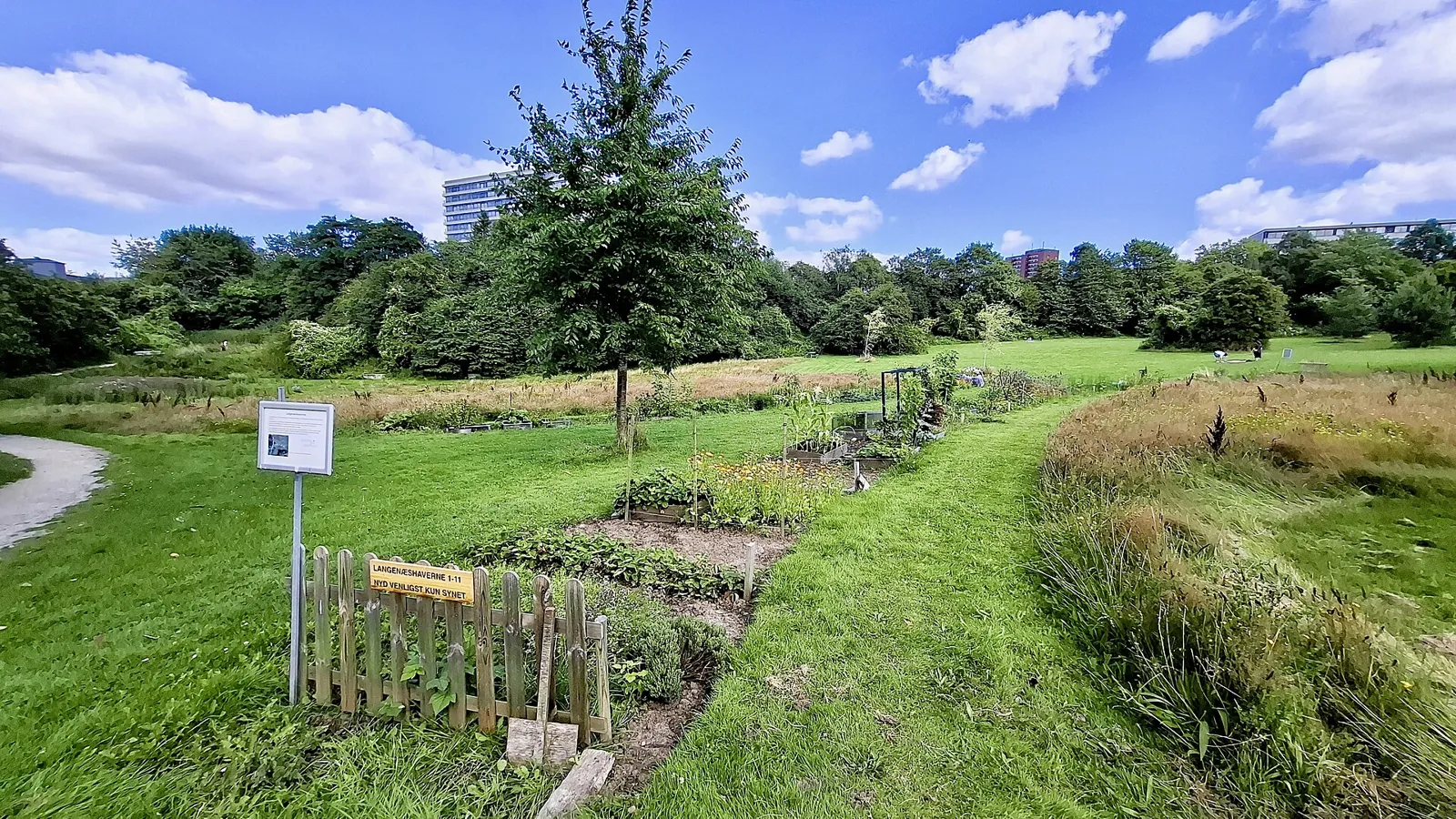
The single biggest decision you make is where the garden goes, and you make it before you plant anything - how much sun vegetables need, why standing water is a dealbreaker, and how the site shapes the plan.
The most important decision in a garden is made before a single seed goes in: where it goes. A good spot forgives a hundred small mistakes; a bad one undoes good work all season. Three things decide a spot, in order of how much they matter: sun, water, and the soil underneath. Get those right and almost anything grows; get the sun wrong and nothing does.
Sun: most vegetables want a lot of it
The rule of thumb the extension services all converge on is six or more hours of direct sun a day for fruiting crops - tomatoes, peppers, squash, beans, corn. Leafy crops and many herbs get by on less, four to six hours, and a few tolerate genuine part shade. "Full sun" on a seed packet means that six-plus-hour spot. Watch the ground across a day before you commit, because the sun is lower and shadows longer than you think, and a fence or a neighbor's tree can steal the morning or the afternoon.
The planner treats a full-sun crop in a shaded spot as a real problem, not a preference:
Well establishedA full-sun species must not be placed in ground the gardener has marked as shaded.
costly if ignored → warn
Mechanism: Photosynthesis. A crop whose light minimum is full sun is below that minimum in shade and underperforms. Declared exposure — a wall, fence, or building the engine cannot see — distinct from the computed neighbour-shadow.
Evidence: settled without a trial - photosynthesis.
remedy
Plant it somewhere you have not marked shaded, or use that ground for a species whose light minimum is part sun.
Read the full rule → · open in the planner ↗
The garden shades itself, too
Sun isn't only about the site - tall plants cast shadows on shorter ones inside the bed, and where you put them decides who gets the light. The planner works this out from your latitude and each plant's mature height, and it holds two rules so the garden doesn't shade its own crops:
Well establishedPlants over 120cm mature height belong on the polar side of a bed.
costly if ignored → warn
Mechanism: Solar geometry. Shadow falls outside the bed rather than across shorter neighbours.
Evidence: settled without a trial - solar geometry.
remedy
Move tall species to the polar edge; sort by descending height equatorward.
Read the full rule → · open in the planner ↗
Well establishedSun-requiring species must not sit in the computed shadow of a taller neighbour.
costly if ignored → warn
Mechanism: Photosynthesis. Compute shadow polygons from latitude, date, and mature height.
Evidence: settled without a trial - solar geometry.
remedy
Move the taller neighbour to the polar edge, or move this plant out of its shadow.
Read the full rule → · open in the planner ↗
This is why a bed is generally laid out with the tall crops - corn, staked tomatoes, trellised beans - on the north side (in the northern hemisphere), stepping down to the short ones on the south.
Water: standing water is a dealbreaker
A garden wants water it can drink and drainage for the rest. The one site condition you cannot plant your way around is ground that stays wet - if water stands after a hard rain, that is a site problem to fix, not a plant to select against:
PromisingGround the gardener has observed to stand water after rain is a site problem to fix before planting, not a plant problem to select around.
costly if ignored → warn
Mechanism: Saturated soil has no air in it, so roots suffocate; and standing water lets Phytophthora release swimming zoospores, which need free water to reach a root or crown at all.
Evidence: confirmed against 5 sources in the research-based literature.
the 5 sources
UC Statewide IPM Program (UC IPM), 'Phytophthora Root and Crown Rot', Home and Landscape, ipm.ucanr.edu/home-and-landscape/phytophthora-root-and-crown-rot/ (fetched and read in-container 2026-07-25). The one written for gardens rather than orchards, and the source of this rule's scope: 'Almost all fruit and nut trees, as well as many ornamental trees and shrubs (including many California natives), can develop Phytophthora root or crown rot'; 'Tomatoes, peppers, eggplant and other vegetable plants can also be affected.' On the threshold: 'Phytophthora diseases can develop in as little to 4 to 8 hours of soil saturation.' On the remedy: 'Avoid prolonged saturation of the soil or standing water around the base of trees or other susceptible plants'; 'Raised beds can improve drainage in a vegetable garden'; 'Consider planting trees and shrubs on mounds. The mounds should be 8 to 10 inches high for annuals and up to 2 feet high with a gradual slope for trees and perennials.' And the warning the ruling_text repeats: 'Never cover the root crown or graft union with soil or mulch.'
UC IPM Pest Management Guidelines, 'Phytophthora Root and Crown Rot', PEACH, ipm.ucanr.edu/agriculture/peach/phytophthora-root-and-crown-rot/ (fetched and read in-container 2026-07-25): 'Periods of 24 hours or more of saturated soil favor Phytophthora infections. Conversely, good soil drainage and more frequent but shorter irrigations reduce the risk of root and crown rot.' 'The most effective ways to manage Phytophthora root and crown rot are to select a good planting site, select an appropriate rootstock, and properly manage irrigation water.' 'Planting on raised berms can also help with disease management.' NOTE THE THRESHOLD DISAGREES WITH THE HOME PAGE ABOVE - 24 hours here, 4 to 8 hours there. This rule quotes neither as a threshold and fires on the gardener's own observation of standing water instead, which is why the disagreement does not reach the ruling.
UC IPM Pest Management Guidelines, 'Phytophthora Root and Crown Rot', PLUM, ipm.ucanr.edu/agriculture/plum/phytophthora-root-and-crown-rot/ (fetched and read in-container 2026-07-25). Read specifically to test whether the corpus's four fruit trees differ, and they do: 'Plum rootstocks are less susceptible to Phytophthora infections than peach rootstocks, so plums grown on plum rootstock seldom have this disease'; 'In general, plum rootstocks are more resistant than are peach or apricot.' But also 'Rootstocks vary in susceptibility to the different Phytophthora species; none are resistant to all pathogenic species of the fungus.' THIS DIFFERENCE IS NOT MODELLED and the rule does not act on it: susceptibility here is a property of the ROOTSTOCK, which this corpus does not carry for plum, and 'less susceptible' is not 'safe in standing water' - the anoxia half of the mechanism does not care about rootstock at all. Recorded because it is the obvious next refinement and because a reader will otherwise wonder why plum is treated like peach.
WSU Hortsense, 'Raspberry: Phytophthora root rot', hortsense.cahnrs.wsu.edu/fact-sheet/raspberry-phytophthora-root-rot/ (fetched and read in-container 2026-07-25): 'Phytophthora root rot can be a problem in the Pacific Northwest when raspberries are planted in areas with poor drainage'; 'Do not plant in waterlogged, poorly drained, or frequently flooded areas'; 'Improve soil drainage by planting raspberries in raised beds (soil level at least 12 inches above the surrounding soil.)' The 12-inch figure in the ruling_text is this one. Also 'The fungus attacks the fine roots, which rot and die.'
Ohio State University Extension, 'Phytophthora Root and Crown Rot of Fruit Trees', Ohioline PLPATH-FRU-06, ohioline.osu.edu/factsheet/plpath-fru-06 (read 2026-07-26). PREVIOUSLY RECORDED HERE AS 403-ING FROM THIS CONTAINER AND CITED ONLY FROM A SEARCH SUMMARY; it was a 404, not a 403 - the URL carried in this pointer was wrong by one character (plpath-fru-6 for plpath-fru-06). The page fetches fine. THE MECHANISM SENTENCE THIS RULE NEEDED: 'Zoospores are released from sporangia only when soil is completely saturated with water (standing water).' That is the zoospore half of the mechanism stated outright, and it is also the justification for the TRIGGER: the rule fires on observed standing water because standing water is the condition the source names. AND IT RESOLVES THE THRESHOLD DISAGREEMENT rather than adjudicating it: 'The longer the period or periods of soil saturation, the greater the risk of infection.' Risk rises CONTINUOUSLY with duration, so UC IPM's 4-to-8 hours and 24 hours are not competing cut-offs but two points on a dose-response - there is no threshold to pick, and quoting neither was correct modelling rather than an evasion. On scope: 'In Ohio, apple, cherry, and peach trees are usually attacked'; 'Pear and plum trees appear to be relatively resistant'; 'Among stone fruits, plums are relatively resistant, whereas the remainder are susceptible to very susceptible'; 'Pears are the most resistant tree fruit crop'. This independently corroborates the UC IPM plum finding in the pointer above, from a second institution. STILL NOT MODELLED, for the same reason recorded there: the page ties resistance to ROOTSTOCK ('Among dwarfing-apple rootstocks, M-9, M-2, and M-4 are relatively resistant'; 'Mahaleb is the most susceptible cherry rootstock'), which this corpus does not carry, and the anoxia half of the mechanism does not care about rootstock at all. [read]
remedy
You told us this ground stands water after rain. Fix the site rather than the planting list: plant on a mound or berm, or build the bed up. UC IPM puts the mound at 8 to 10 inches for annuals and up to two feet, with a gradual slope, for trees and perennials; WSU asks for at least 12 inches for raspberries. Fruit trees and brambles have the most to lose, and tomatoes, peppers and eggplant are named as susceptible too. Never bury the root crown or graft union when you mound. We are not naming a drainage rate or a tile spacing - that is an engineering number and this is a garden app.
Read the full rule → · open in the planner ↗
Saturated soil has no air in it, and roots drown. Watch your prospective spot after a heavy rain: if puddles sit for hours, either pick somewhere else or lift the growing ground above the wet with a raised bed or a mound - the build a raised bed guide covers how. You also want water you can reach: a garden a long way from a hose is a garden that gets watered less than it should.
Slope, access, and the honest constraints
A few more things tip a spot from workable to good:
- Gentle slope is fine; steep is erosion. A slight grade actually helps cold air and water drain away. A steep one washes soil downhill - terrace it or pick flatter ground.
- Level enough to work. You'll be standing, kneeling, and pushing a wheelbarrow here.
- Near the house gets tended. The single best predictor of a garden that thrives is how often you walk past it. A bed by the back door gets noticed and watered; one at the bottom of the yard gets forgotten.
None of this needs to be perfect. Pick the sunniest, best-drained spot you can reach easily, and let the garden types guide help you choose what to hold the soil in once you know where it's going.