A plant's mature spread must fit its allocated area.
Well establishedHow it works: Geometry.
Evidence: settled without a trial (arithmetic).
Remedy
Reduce plant count, or choose a bush cultivar group.
A first-season walkthrough. Pick a few forgiving crops, count from your frost dates, start what needs a head start, harden it off, and get it in the ground at the right time.
What you need
Your first bed is easier than the internet makes it look. The trick is to plant a few forgiving crops and let your frost dates tell you when. Here’s the whole sequence on a small bed, with three crops that between them teach the three ways a plant starts: a fast leaf crop you scatter now, a big-seeded crop you push straight into the ground, and one warm-season crop you give a head start indoors.
Choose a bed in full sun (six to eight hours) that you can reach without stepping on. Then pick three easy crops: radish or lettuce (a fast cool-season crop you sow direct), bush beans (a big seed that goes straight in the ground), and one tomato (a warm-season crop worth starting early indoors). Don’t crowd them. Every plant needs its mature spread, and the planner will hold you to it:
How it works: Geometry.
Evidence: settled without a trial (arithmetic).
Reduce plant count, or choose a bush cultivar group.
Everything from here is timed off your last spring frost. Get it from the planner (it comes with your address), and remember it’s an average. Some years frost comes later. The frost dates guide explains how to read the odds. You’ll count backward from it for the tomato and forward for the beans.
A tomato needs a running start to ripen in a normal season, so it goes on a windowsill or under a light several weeks before it can move outside. The planner schedules the exact head start:
How it works: A frost-tender crop with a long days-to-maturity cannot mature if it is only direct-sown after the last frost, because the frost-free window is too short. A head start under cover buys the weeks the season lacks; the seedling is set out only once frost has passed, so the transplant date is still frost-gated.
Evidence: checked against 3 sources in the research-based literature.
We summarise this source in our notes rather than quote a line from it.
Early-to-mid-March Vegetables & herbs: artichoke, broccoli, cabbage, cauliflower, eggplant, kale, lettuce, oregano
Sow it in a small pot, keep it warm and well-lit, and let it grow while it’s still too cold outside.
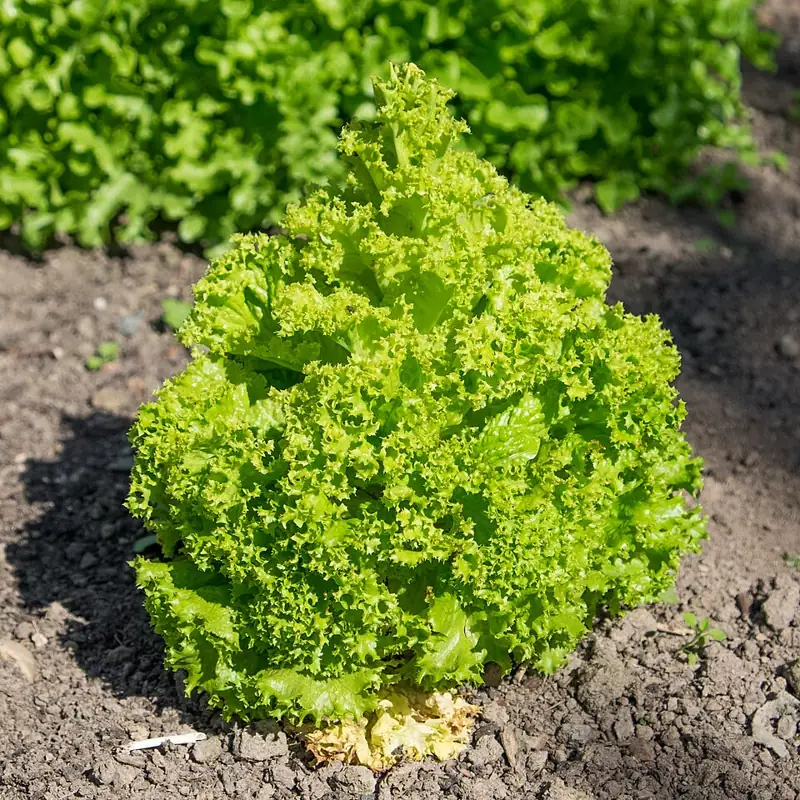
Radish and lettuce are hardy. They want the cool. Sow them straight into the bed about three weeks before your last frost, radish 1.3 cm0.5 in deep and lettuce 0.6 cm0.2 in, and thin the seedlings to their spacing once they’re an inch or two tall (snip them; pulling disturbs the neighbors). This is the hardy-crop offset in action:
How it works: Cold hardiness. Hardy crops tolerate hard frost and half-hardy crops tolerate light frost, so they can occupy the ground weeks before frost-tender crops are allowed in. The offset is measured from the last spring frost.
Evidence: checked against 2 sources in the research-based literature.
… withstand freezing temperatures and hard frosts without injury
As early as 2-4 weeks before the date of the average last spring frost
Plus 2 working notes on how the sources were read.
Once the danger of frost has passed and the soil has warmed, push the bean seeds an inch into the ground where they’ll grow. Big-seeded crops resent transplanting and catch up fine from a direct sow. The tomato goes out about two weeks later, once the days stay warm, because it’s very tender and cool days stunt it. Plant it deeper than it grew in its pot, buried up to its first leaves, because a tomato grows roots all along a buried stem. Water everything in.
Radish and lettuce are fast and finish all at once, so re-sow a short row of radish every 7–10 days and one of lettuce every 10–14 days. That’s succession sowing, and it turns one glut into a steady harvest:
How it works: Sowing the same crop in batches about two weeks apart staggers when each batch matures, so the harvest arrives as a continual succession, with no single glut. It pays off only for short-DTM crops, whose quick turnaround lets several sowings ripen within a single season.
Evidence: checked against 1 source in the research-based literature.
Plant one crop, then approximately 2 weeks (or more) later, plant the same crop in another area to have a continual harvest.
Sun, the right timing off your frost dates, spacing the plants can live with, and a habit of re-sowing the fast crop. Log what you planted and where. Next year that record is what lets the crop rotation move each family to fresh ground.
Good places to read more about the technique on this page. The grade on each card comes from that card’s own sources.
The rules this guide leans on:
Plants in this guide: Lettuce