Your last and first frost dates are the clock the whole garden runs on. What they mean, why they're a probability, and how they decide when each crop can go out.
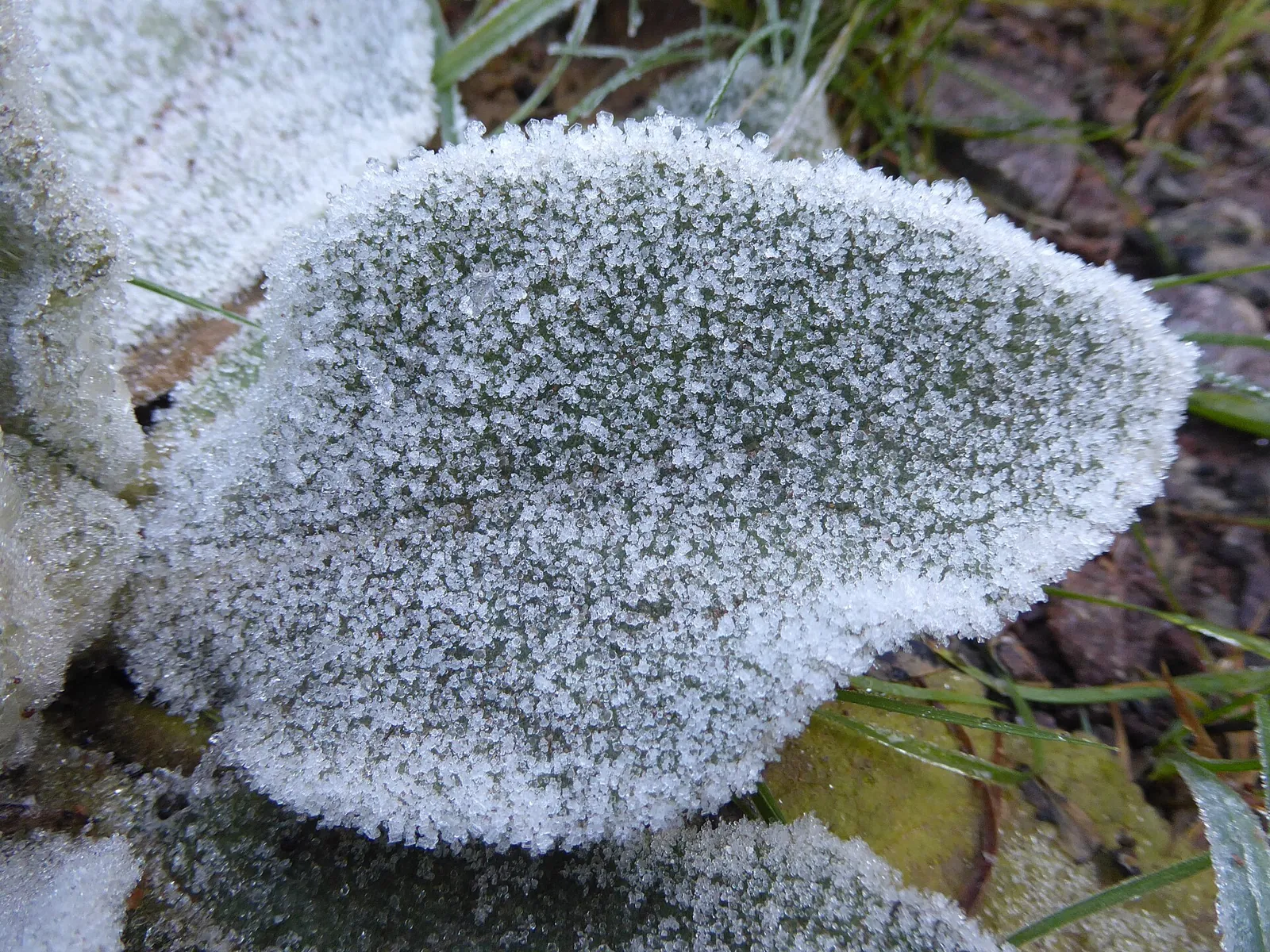
Photo: Syrio · CC BY-SA 4.0, via Wikimedia Commons.
What you need
Your location - the planner turns your address into your local frost dates
The knowledge that a frost date is an average, not a guarantee
Almost every “when do I plant this?” question is really a question about frost. Your last spring frost and first fall frost mark the ends of your growing season, and nearly every planting date in the garden is counted forward or backward from them. Get these two dates and their meaning straight and the rest of the calendar falls into place.
Is the last frost date a guarantee?
Most sites get this wrong. A published “last frost date” is a statistical average, the date by which the last freeze has usually passed in most years. It doesn’t mean frost is impossible after that day. There’s still a real chance of a frost after it. Published dates are typically drawn at a probability threshold that leaves roughly a one-in-ten to three-in-ten chance of a later freeze.
That’s why this planner hands you the odds for your garden, so you can decide how much risk to take with a tender crop. A single date was never a promise. The planner reads them from the nearest weather station, or from a weather model where no station is close, and tells you the range; the choice of how safe to play it is yours.
Here’s one station’s spring, drawn from its own thirty-year record. The median last-frost date isn’t a safe date. It’s the middle of the odds, so frost still arrives later in half of years. Waiting for the one-in-ten date buys you a season that frost spoils only about one year in ten:
frost most years
frost in some years (the gamble)
frost rare (about 1 year in 10)
Last spring frost at Chicago Northerly Island, Illinois (NOAA station USC00111550), as odds. Plant to the median and frost still comes later in half of years.
What do frost dates decide for me?
A crop’s frost tolerance decides where in that window it can sit. The tender ones (basil, beans, summer squash) have no tolerance at all and can’t go out until the danger has passed:
Don't sow or set out tender crops before your last frost date
The very tender ones (tomato, pepper, eggplant, the melons) wait longer still. Cool days stunt them even without a frost, so they go out about two weeks after the last frost:
Very tender crops go out about two weeks after the average last spring frost: tomato, pepper, eggplant, lima beans, melons, watermelon, pumpkin and winter squash. Tender crops go in at the frost itself.
If you skip this, it still grows, just less well. The planner suggests it.
How it works: Chilling. A very tender crop is hurt by cool weather as well as by frost: it needs daytime temperatures above 60 °F, and a week of days below 55 °F can stunt it. Setting it out about two weeks after the average last frost gives the days time to warm.
Evidence: checked against 2 sources in the research-based literature.
The hardy and half-hardy crops are the opposite. They tolerate cold and can go out before the last frost, on an offset measured from it, and that’s how the planner schedules them:
Cold-hardy annuals can be sown or transplanted before the last spring frost (hardy crops about three weeks before, half-hardy about two weeks before). Tender crops wait for the frost itself.
If you skip this, it still grows, just less well. The planner suggests it.
How it works: Cold hardiness. Hardy crops tolerate hard frost and half-hardy crops tolerate light frost, so they can occupy the ground weeks before frost-tender crops are allowed in. The offset is measured from the last spring frost.
Evidence: checked against 2 sources in the research-based literature.
And the whole season has to be long enough for a crop to finish. A long-season crop in a short season won’t make it to harvest before the fall frost, so the planner checks that too:
Don't plant a crop that can't mature before your frost-free season ends
If you skip this, the planting fails. The planner won’t allow it.
How it works: The season's accumulated growing degree days (a running total of its warmth) against the total the crop needs to mature, or the crop's days to maturity against the number of frost-free days.
Evidence: checked against 3 sources in the research-based literature.
Once you know the average dates of the last frost in spring and the first frost in fall, count the number of days between. If the “days to maturity” figure for a desired vegetable is a larger number of days and the “frost tolerance” column indicates “none,” the sad truth is that particular vegetable probably won’t grow to maturity.
… high elevation areas don’t accumulate enough “growing degree units” (GDUs, also called growing degree days and heat units) to support some of the most coveted warm season vegetables
Remedy
Start it indoors and transplant it, choose a variety with fewer days to maturity, or skip this crop at this site.
This is a common tangle. The USDA hardiness zone, the frost dates, and day length answer three different questions and should never be treated as one. Zone tells you whether a perennial survives the winter; frost dates schedule your annual planting; day length drives things like onion bulbing. Most garden tools collapse all three into “your zone,” which is wrong. The explainer your zone does not know your frost date walks through why.
In short
Find your two frost dates, treat them as odds, and count from them: tender crops after the last one, very tender crops about two weeks after it, hardy crops before it on their offset, and every crop finishing before the fall frost. The first-bed walkthrough puts this into practice on a real planting.
Further reading
Good places to read more about the technique on this page. The grade on each card comes from that card’s own sources.