Floating row covers: frost protection, pest exclusion, and the one rule
A lightweight fabric that buys you a few degrees of frost, keeps pests off physically, and warms the soil. There's one hard rule about when you have to take it off, or you'll get no fruit.
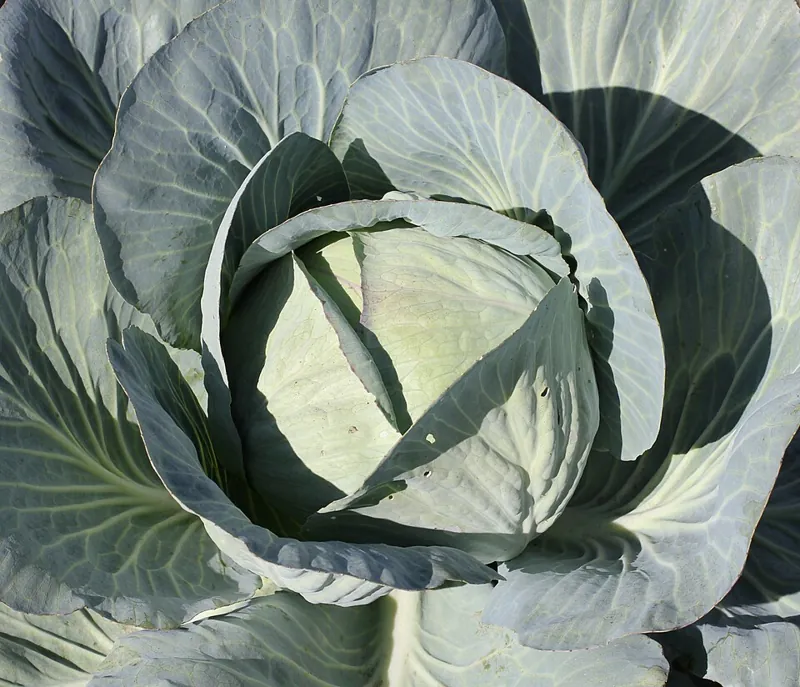
B. oleracea also includes broccoli, cauliflower and kale by cultivar group. Photo: George Chernilevsky · Public domain, via Wikimedia Commons.
What you need
Row cover fabric, a light weight for pests and light frost, a heavier one for more cold protection
Hoops to hold it off the plants, or just the slack to let it “float” as they grow
Something to pin or bury the edges, such as soil, boards, or landscape staples
A floating row cover is a sheet of lightweight spun fabric you lay over a crop. It’s one of the most useful cheap tools in a garden because it does three different jobs at once. It also comes with a single hard rule that, if you break it, costs you your harvest on some crops. Learn the three jobs and the one rule and you’ll reach for it constantly.
What does a floating row cover do?
Frost protection. The fabric traps a little of the ground’s heat, buying a few degrees on a cold night. That’s often the difference between losing tender plants and carrying them through a late spring or early fall frost, so a cover extends your season at both ends.
Pest exclusion. This is the big one. A cover is a physical wall between the pest and the plant. Cabbage moths can’t lay eggs on covered broccoli, flea beetles can’t reach the greens, and cucumber beetles can’t find the seedlings. No spray is required, because the insect never lands.
Warmth for early growth. The slightly warmer, sheltered air under a cover pushes spring growth a little faster.
Fabric comes in weights. A light one lets through more light and is meant for pests and mild frost; a heavier one holds more heat but shades the plant more, so you match the weight to the job.
Is there a time I must take the cover off?
This is the rule that catches people, and it follows directly from how fruit sets:
An insect-pollinated crop depends on an insect to move pollen between its flowers; no arrangement of plants substitutes for one.
If you skip this, it still grows, just less well. The planner suggests it.
How it works: A monoecious cucurbit bears pollen and ovules in separate flowers, so fertilization requires a vector to carry pollen between them. Neither wind nor self-fertility applies. Ovules that are not fertilized do not develop, and the fruit aborts or forms misshapen.
Evidence: checked against 4 sources in the research-based literature.
Summer squash flowers require insect pollination and are only open in the morning
Remedy
Nothing here can guarantee insects, and their absence cannot be diagnosed from a plant list. What you can change is whether anything in the garden is in flower while the crop is. Plants that feed insects near a fruiting crop are a reasonably supported suggestion. They are not a proven fix.
A cover that keeps pests out keeps pollinators out too. It can’t tell the difference. So for any crop you grow for its fruit (squash, cucumbers, melons, and other insect-pollinated crops) you have to take the cover off once it starts flowering. Otherwise the bees never reach the flowers and you get the same empty, no-fruit result as if there’d been no pollinators at all. The pollination guide explains why nothing substitutes for the insect.
The good news runs the other way. Crops you harvest before they flower (leafy greens, cabbage and kale, root crops like carrots and radishes) have nothing to pollinate, so you can leave the cover on all season and keep the pests out start to finish. That’s why the cabbage family is the row cover’s best friend and squash is its trickiest customer.
How do I put one on?
1. Drape it loosely so it can “float,” leaving slack for the plants to grow into, or lay it over hoops if you want it held off the foliage. 2. Seal the edges. Bury them in soil, weigh them with boards, or pin them with staples. A cover with a gap at the bottom lets in the very pests it’s meant to exclude. 3. For pest control, put it on early, at transplanting or as seedlings emerge, before the pest shows up. A cover thrown over an already-infested plant traps the pests inside with their food.
Used this way a row cover is season extension, an organic pest barrier, and a warm start in one cheap sheet. Just remember to lift it for the bees on anything you’re growing for its fruit. For more on using frost dates to time the season it extends, see the frost dates guide.
Further reading
Good places to read more about the technique on this page. The grade on each card comes from that card’s own sources.