Why is my squash not setting fruit? Pollination for the home gardener
Lots of flowers and no fruit is usually a pollination problem. How squash, cucumbers, corn, and the crops that need a partner get pollinated, and the short list of what you can do about it.
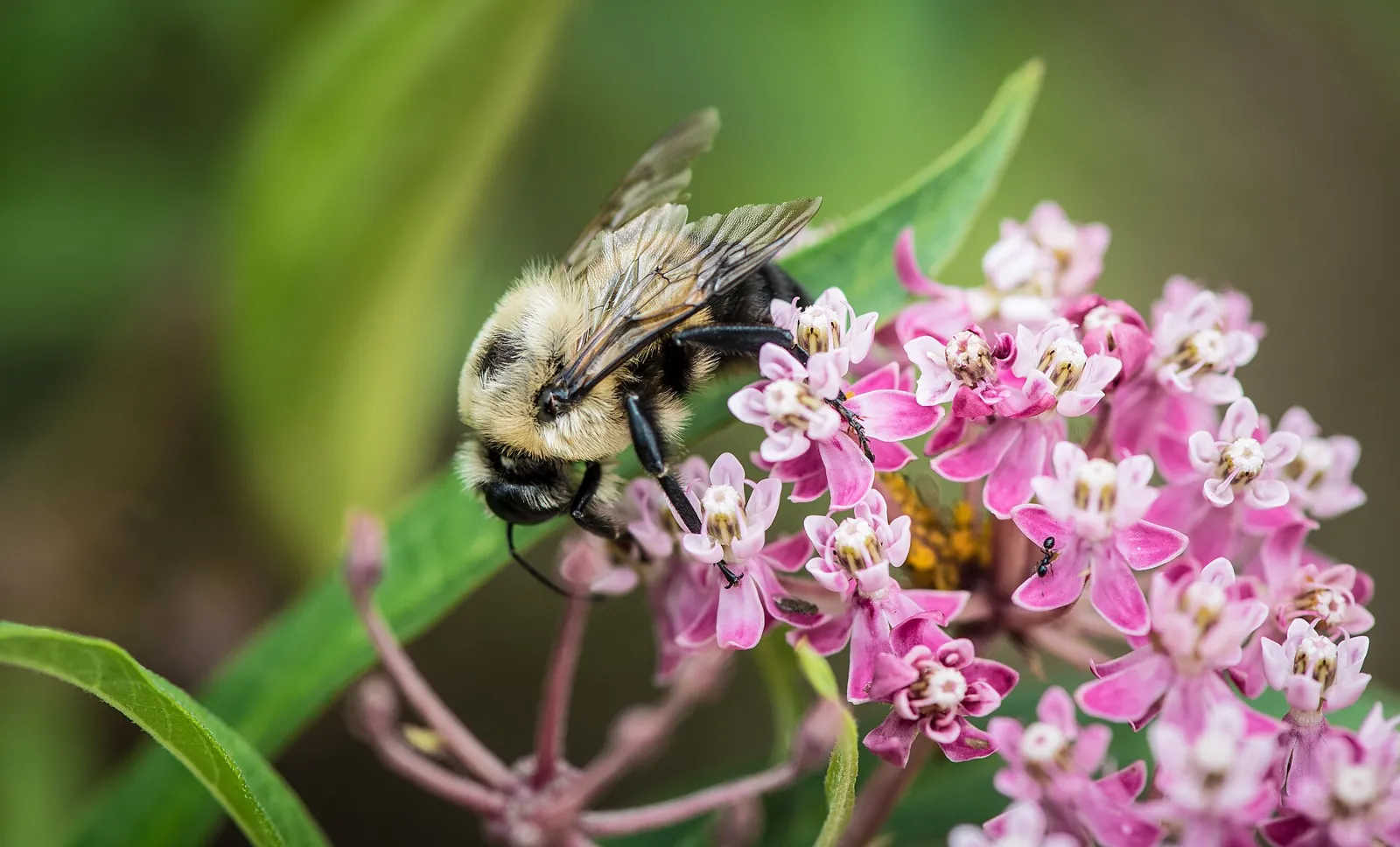
Photo: U.S. Department of Agriculture Lance Cheung/Multimedia PhotoJournalist · Public domain, via Wikimedia Commons.
What you need
Patience. The first flowers on a squash or cucumber are male and set no fruit by design.
Insects in the garden, or a small brush to stand in for them
For corn, enough plants to make a block instead of a row
A squash plant covered in flowers that never becomes squash is one of the most common midsummer panics, and the usual cause is pollination. Disease and deficiency are rarely to blame. A flower has to be pollinated before the fruit behind it will grow, and different crops get that done in completely different ways. Knowing which way yours uses tells you whether you have a problem at all, and what, if anything, to do.
Why do my squash and cucumbers flower but set no fruit?
Start with the thing that isn’t a problem. A young squash or cucumber plant makes only male flowers for a week or two before the female ones appear. No fruit ever forms on a male flower, so early flowers with no fruit are the plant working normally. The female flower is the one with a tiny fruit already formed at its base, and it needs pollen carried to it from a male flower to make that fruit grow. Insects do that carrying, and nothing else does it.
An insect-pollinated crop depends on an insect to move pollen between its flowers; no arrangement of plants substitutes for one.
If you skip this, it still grows, just less well. The planner suggests it.
How it works: A monoecious cucurbit bears pollen and ovules in separate flowers, so fertilization requires a vector to carry pollen between them. Neither wind nor self-fertility applies. Ovules that are not fertilized do not develop, and the fruit aborts or forms misshapen.
Evidence: checked against 4 sources in the research-based literature.
Summer squash flowers require insect pollination and are only open in the morning
Remedy
Nothing here can guarantee insects, and their absence cannot be diagnosed from a plant list. What you can change is whether anything in the garden is in flower while the crop is. Plants that feed insects near a fruiting crop are a reasonably supported suggestion. They are not a proven fix.
If bees are scarce, say in a cold wet spell, a sprayed neighborhood, or on a balcony five floors up, the female flowers open, go unvisited, and their little fruits yellow and rot off. The fix when insects are missing is to be the insect. Pick a male flower, strip its petals, and dab its pollen onto the center of each open female flower in the morning. It works immediately and it’s the one reliable remedy. Everything else you can do is indirect. Keeping something in bloom near the crop to draw insects in is a reasonable suggestion, but as the rule says, it’s no guarantee. There’s more on why no plant arrangement can stand in for a pollinator in the explainer what pollination needs.
Do some crops need a second plant nearby?
For a second group of crops, one plant can’t pollinate itself no matter how many insects visit. It needs pollen from a different plant.
Some plants can't fruit from their own pollen, so they need a second plant of a different variety nearby.
If you skip this, you lose real yield. The planner warns you.
How it works: Many fruit trees carry self-incompatibility alleles at a single locus. When a pollen grain shares an allele with the pistil it lands on, the pistil rejects it and no seed sets. A plant's own pollen always shares its alleles, so it cannot fertilize itself. Neither can a second tree of the identical variety, which is genetically the same. Fertilization needs pollen from a genetically distinct plant.
Evidence: checked against 2 sources in the research-based literature.
Japanese plum exhibits gametophytic self-incompatibility (GSI), a prezygotic reproductive barrier where genetically related pollen is rejected by the pistil ... governed by a polymorphic locus (S) ... Self-incompatibility occurs when the same S-allele is expressed in the haploid pollen grain and the diploid pistil.
Remedy
Plant at least two, and where the species needs a second cultivar make them different varieties. Two of the same will not pollinate each other.
So if a crop is self-incompatible, a single specimen sets little or nothing even in a garden full of bees. Plant at least two, and where the species needs it, two different varieties, because two of the identical clone won’t cross. This failure is the opposite of the squash one. There the flowers went unvisited. Here they’re visited, but no compatible partner supplies the pollen.
How does corn get pollinated?
Corn ignores insects entirely. It’s pollinated by wind, and that changes everything about how you have to plant it.
Corn needs a block of at least three short rows side by side for good kernel set, and four rows is better.
If you skip this, the planting fails. The planner won’t allow it.
How it works: Maize is wind-pollinated and protandrous (each plant sheds its pollen before its own silks are ready). Tassels shed pollen that must land on the silks of neighboring plants. In a single row much of the pollen blows out of the row, and each silk it misses is one missing kernel.
Evidence: checked against 5 sources in the research-based literature.
Always plant corn in blocks of at least four rows. Corn planted in a single row will have much of its pollen blown out of the row, and will produce ears that have blank areas where kernels did not form.
This crop is wind-pollinated; therefore, plant in blocks of several rows rather than 1 or 2 long rows to ensure full ears.
richmond.ces.ncsu.edu
Glass Gem CornNC State Extension, Richmond County Center
When tassels start dropping pollen, stalks can be gently shaken. This mimics wind and will release the pollen to float down to the silks.
Remedy
Plant corn in a block of several short rows rather than one long row; four rows is best. For a small patch, shake the stalks gently while the tassels shed pollen, or dust a cut tassel over the silks, every few days. Or leave corn out and give the beans a trellis.
The pollen falls from the tassels at the top and has to land on the silks below. Each silk that doesn’t catch a grain is one missing kernel, which is why a lonely row of corn makes those sad, gap-toothed ears. Planted in a block of at least four short rows, enough pollen reaches enough silks. That’s why the Three Sisters mound always plants corn as a block and never a single row.
So which crops need help setting fruit?
Put the three mechanisms together and fruit-set comes down to a short list of real actions:
Squash, cucumbers, melons: wait out the early male-only flowers; if fruit still drops, hand- pollinate. Draw insects in by keeping something in bloom nearby. It helps, with no guarantee.
Self-incompatible crops: plant two or more, different varieties where the species asks for it.
Corn: plant a block, never a row.
Everything: a poor set in a heat wave often fixes itself when the weather breaks. Extreme heat makes pollen non-viable for a while, and a planting change can’t solve that.
You won’t find a companion-planting chart here claiming a particular neighbor “improves pollination.” The guide what the evidence says about companion planting covers why those charts don’t hold up. A pollinator needs flowers to feed on and a season without poison. A lucky pairing doesn’t come into it.
Further reading
Good places to read more about the technique on this page. The grade on each card comes from that card’s own sources.