What pollination actually needs, and what nobody can tell you
Some crops set fruit alone; some need an insect to carry the pollen. That difference decides what a bad year means - and one part, no app can honestly claim to know.
Three different plants, three different problems
A tomato flower has both halves in it. It pollinates itself, and a bumblebee shaking it only helps a little. If your tomatoes aren't setting fruit, the usual culprit is warm nights, not a shortage of insects.
Corn doesn't use insects at all. It's pollinated by the wind: the tassel sheds pollen that has to land on the silks below, which is why a single row of corn gives you ears with blank patches and a block of four rows doesn't. Nothing that flies is involved.
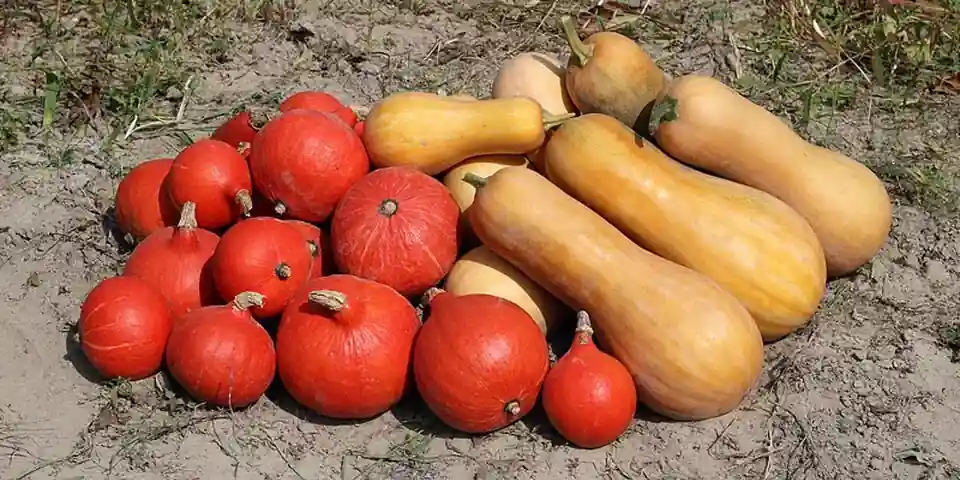
A squash is neither. It carries its male and female flowers separately on the same plant, and the pollen can't get from one to the other on its own. An insect has to carry it. Extension services say so plainly: pollen "must be transferred from the male flowers to the female flowers by bees," and where that transfer comes up short you get no fruit - or a fruit that starts and then shrivels at the blossom end.
Cucumbers, melons, watermelons, pumpkins, and tomatillos are all in the same boat. So are apples, pears, plums, and cherries, which need one more thing on top: pollen from a different variety - two trees of the same kind are really just two of the same tree, and you get no fruit.
What that means when a fruit fails
A squash that sets and then aborts is a genuinely murky event, and it's worth being honest about how many things could have caused it.
Cold, cloudy, or rainy weather keeps the bees home. Above about 90 °F a lot of bees slow right down, and the plant itself reacts to heat by making proportionally more male flowers. The first flush of fruit on a young plant often fails for no reason beyond the plant being young. And squash flowers are only open for a few hours in the morning, so a wet morning is a lost day.
Any of those can give you the same shrivelled fruit. So can a genuine shortage of visits.
The thing no app can tell you
Here's where this planner stops.
We can't see whether insects visit your garden. There's no sensor, no camera, and - by deliberate choice - no weather feed anywhere in this app. Bees don't live in your beds; they fly in from wherever they're nesting, which might be a neighbour's hedge or a scrap of waste ground three streets over. A garden with nothing in flower still gets visited. A garden full of flowers can still have a bad week.
So when this planner notices that your squash needs insects and nothing else in that bed is in flower at the same time, it's telling you one specific, checkable thing about your plant list - not diagnosing your fruit. That difference is worth spelling out:
- "Nothing you've planted is in flower from early to late summer" is just arithmetic over the plants you told us about. It's either true or false, and we can check it.
- "You have no pollinators" is a claim about insects. We have no way to know that, and we won't say it.
- "This is why your squash failed" is a diagnosis. With weather alone, we can't rule the other causes out, so we don't offer it.
Is planting flowers worth doing, then?
Probably - and that word is doing real work.
Extension guidance recommends planting a mix of flowering plants in or around a vegetable garden to draw in pollinators, and you'll see the same advice for encouraging the insects that eat pests. What none of those sources say is that a garden without flowers sets less fruit than one with them. Nobody has published that comparison for a home garden in a way we'd be willing to lean on.
That's why this planner grades the two halves of the advice differently. That squash needs an insect to carry its pollen is about as well established as anything in the corpus. That adding flowers nearby improves your odds is reasonably supported - a sensible thing to do, not a proven fix. You'll see that difference in how the two are worded, and it's on purpose.
Bumblebees and squash bees are the ones that matter most for squash and its cousins, and both forage in the morning, which is exactly when squash flowers are open. Something blooming at the same time as the crop is a better bet than something that finished back in May.
What to do with that
Look at when your crop actually needs insects, and at whether anything else you've planted is in flower then. If nothing is, that's worth knowing and cheap to fix - dill, yarrow, clover, cleome, and sunflowers all bloom through the middle of summer, and none of them takes much room.
If your squash still fails after that, it may well have been the weather. We'd rather tell you that than sell you a certainty nobody actually has.