Why won't my tomatoes set fruit? Heat, blossom drop, and the shade-cloth mistake
A tomato plant covered in flowers that drop without making fruit is usually being stopped by the temperature, and specifically by the night temperature. That's why the shade cloth everyone reaches for does nothing.
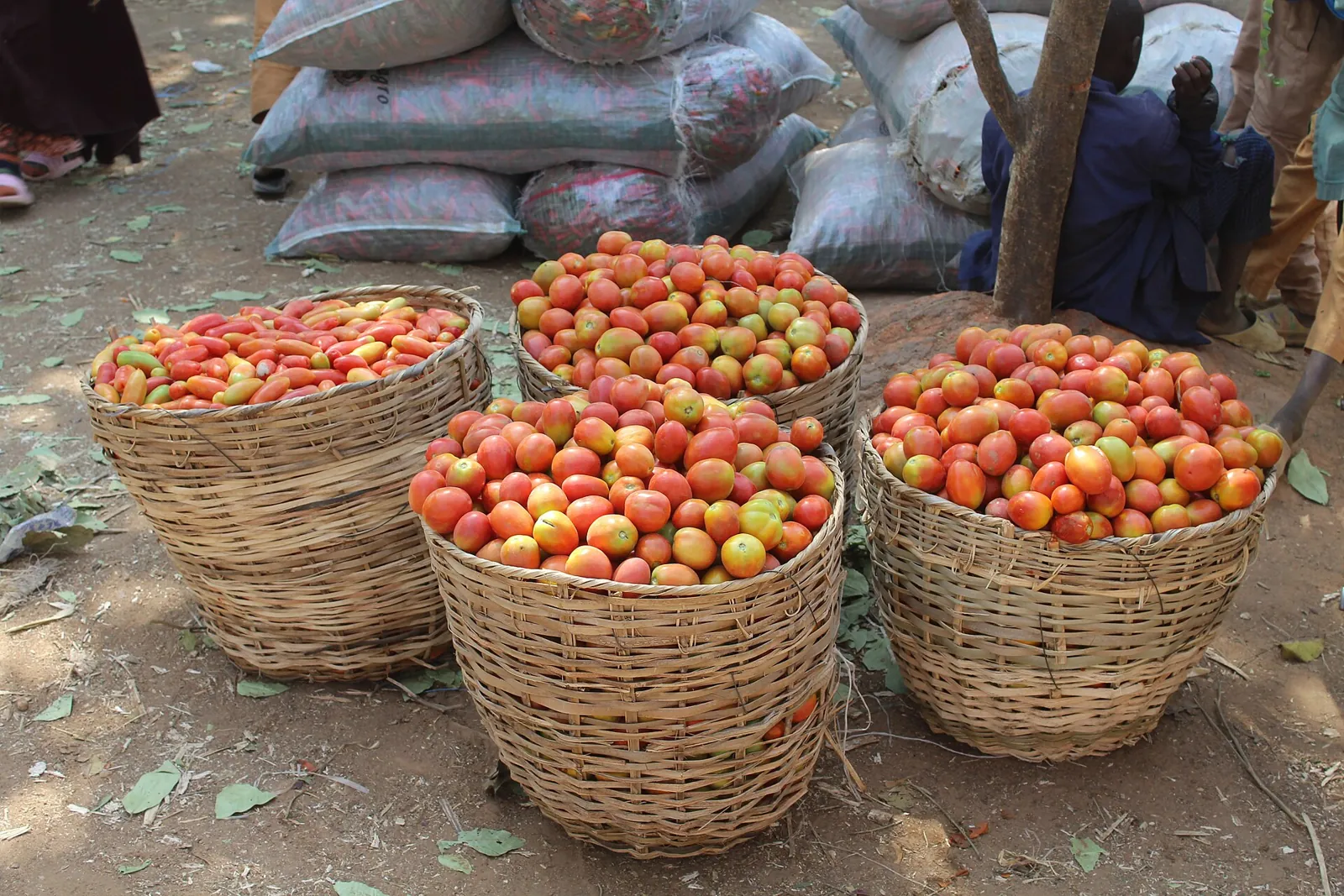
Photo: Friday musa · CC BY-SA 4.0, via Wikimedia Commons.
A thermometer that records the overnight low, or a forecast that gives it - the day’s high is the number everyone watches and the wrong one
Even watering through the hot spell, so heat stress doesn’t turn into a second problem
Mostly patience - this one resolves itself
Midsummer, and the tomato plant looks magnificent. It’s big and green and covered in yellow flowers, and every one of those flowers turns pale, loosens, and falls off without leaving anything behind. No fruit, for weeks.
This is the most misdiagnosed problem in a vegetable garden, because a healthy-looking plant that won’t fruit invites you to go looking for something you did wrong. Usually you didn’t. The weather is shutting the plant down, and the number that does it isn’t the one you’re watching.
Why has my tomato stopped setting fruit?
Tomato fruit set fails when night temperatures persistently exceed ~21 °C (70 °F); high day temperatures above 29-32 °C (85-90 °F) compound it.
If you skip this, you lose real yield. The planner warns you.
How it works: Sustained high day (>29-32 °C / 85-90 °F) and night (>21 °C / 70 °F) temperatures make pollen non-viable ("tacky") and impair its release; flowers go unfertilized within their ~50-hour window and abscise.
Evidence: checked against 2 sources in the research-based literature.
When daytime temperatures exceed 85 degrees F or nighttime temperatures exceed 70 degrees F, pollination suffers due to pollen becoming "tacky" and non-viable.
Daytime highs of 90° F and above and nighttime lows only getting down to 70° F ... will cause blossom drop and fruit abortion in tomatoes.
Remedy
Wait it out. Fruit set resumes on its own once nights cool, and the plants make up the gap. Do not reach for shade cloth. It cools the day, and this failure is driven by the night temperature, which Missouri IPM says shading will not touch. If hot nights are normal where you garden, buy a heat-set cultivar next season.
Tomato pollen is temperature-sensitive in a way that’s easy to miss. Held too hot for too long it goes, in the trade’s own word, tacky. It stops being viable and stops being released cleanly from the anther. A tomato flower is only receptive for roughly two days. If the pollen doesn’t move and land in that window, the flower is never fertilized, and the plant won’t carry an unfertilized flower. It abscises it, which is the botanical term for the plant cutting the flower loose on purpose. That’s the yellowing and the drop you’re watching. Nothing has attacked the plant.
Two thresholds matter, and they compound. Days above about 29–32°C85–90°F hurt. Nights that stay above about 21°C70°F hurt more, and they’re harder to escape, because a hot day at least ends.
Why doesn't shade cloth fix it?
This is the most useful part of the guide. When it’s 35°C95°F out and the flowers are dropping, the instinct is to shade the plant, and every garden center will happily sell you the fabric to do it.
It won’t fix this.
Shade lowers the daytime temperature. The failure this rule fires on is driven by the night temperature, and nothing you drape over a plant at noon changes how warm the air is at 3am. The extension service that supplies the 29°C/21°C85°F/70°F thresholds offers shade for the day and then withdraws it for the night in the same breath. Shading, it says plainly, will not affect the night-time temperatures that are reducing your fruit set.
That makes this an unusual rule for this corpus, because its remedy names a wrong move. It’s here because the wrong move is the one you were about to make. It costs money and an afternoon, and when it doesn’t work you’ll conclude the plant is diseased and start treating it for something it doesn’t have.
So what helps?
Three things, in descending order of how much they matter.
Wait. This is the main answer, and it’s the one nobody wants. Fruit set resumes by itself once the nights come down, and tomato plants are good at making up the gap. The flowers you lost in the hot fortnight get replaced by the ones set afterwards. A plant that dropped everything in late July is very often loaded in September. Don’t rip it out mid-heatwave.
Keep the water even. Watering won’t fix heat. But a plant swinging between bone-dry and flooded in hot weather will hand you a second, separate problem on top of the first: the sunken black patches of blossom-end rot, which is a water-delivery failure. It isn’t a soil deficiency. The how to water guide covers the deep, steady rhythm that avoids it.
Buy a heat-set cultivar next season. If hot nights are what summer is like where you garden, this isn’t a bad year. It’s your climate, and it will happen again. Some tomato varieties are bred specifically to set fruit through it; look for “heat-set” or “heat-tolerant” on the packet or the plant tag. That’s a decision for the seed order, and it can wait past this week.
Could it be a different 'no fruit' problem?
“My plant flowers and I get no fruit” describes three completely different failures, and the fix for each is useless against the other two. Before you settle on heat, check which one you have.
Is it a tomato, or is it a squash? This matters more than it sounds. The corpus records tomato’s pollination as self, buzz-assisted. A tomato flower carries both parts, fertilizes itself, and only needs the pollen shaken loose, which wind or a passing bumblebee normally does. A squash or cucumber is the opposite case. It carries male and female flowers separately, and an insect has to physically ferry pollen between them:
An insect-pollinated crop depends on an insect to move pollen between its flowers; no arrangement of plants substitutes for one.
If you skip this, it still grows, just less well. The planner suggests it.
How it works: A monoecious cucurbit bears pollen and ovules in separate flowers, so fertilization requires a vector to carry pollen between them. Neither wind nor self-fertility applies. Ovules that are not fertilized do not develop, and the fruit aborts or forms misshapen.
Evidence: checked against 4 sources in the research-based literature.
Summer squash flowers require insect pollination and are only open in the morning
Remedy
Nothing here can guarantee insects, and their absence cannot be diagnosed from a plant list. What you can change is whether anything in the garden is in flower while the crop is. Plants that feed insects near a fruiting crop are a reasonably supported suggestion. They are not a proven fix.
So “there are no bees this year” is a real diagnosis for your squash and a red herring for your tomatoes. If both are sulking, they’re sulking for different reasons. The pollination guide covers the insect-vector side.
Is the fruit setting and then going wrong? If you’re getting fruit but it develops a leathery, sunken black patch on the bottom, fruit set is working fine. That’s blossom-end rot, a different mechanism with a different fix, and the eggshells and Epsom salts you’ll be told to use are aimed at the wrong problem.
Is it just early? A young plant, or one that went out at the very start of the season, may not be in its fruiting window yet. The planting calendar guide covers reading your own dates in place of the packet’s generic ones.
The short version
Flowers dropping in a heatwave aren’t a sign of disease, deficiency, or a pollinator shortage. The plant is declining to set fruit with pollen the temperature has spoiled, and the temperature that did it was probably the overnight low. Water evenly so you don’t earn a second problem, leave the shade cloth on the shelf, and let the nights come down.
What this guide can’t answer yet
These questions have no graded answer here yet. They are collected across the library on the open questions page.
Does too much nitrogen cause the blossoms to drop?the corpus grades night heat as the fruit-set cause; a nitrogen-to-blossom-drop mechanism has no graded card and none of the heat rule's sources cover it
Further reading
Good places to read more about the technique on this page. The grade on each card comes from that card’s own sources.