Frost dates for Düsseldorf, Germany
Half of years have their last spring frost by April 18, but 1 year in 10 still frosts after May 7.
The pale stroke is about 199 days with no frost, in half of years.
From the Dusseldorf weather station, 9 km (5 miles) away, 30 winters · Promising
How to read this
- The pale stroke is the season with no frost.
- The marked line is when frost is likely: more marks, more likely.
- It reads clockwise from January at the foot, with midsummer at the top.
These frost dates are the Dusseldorf weather station’s own, 9 km (5 miles) from Düsseldorf, from 30 years of its daily lows in NOAA’s GHCN-Daily records. It recorded a frost in 29 of its 29 winters on record from 1991 to 2020. Hollows and low ground near your garden can frost later in spring and earlier in fall than the station does.
The weather model’s dates for Düsseldorf: last frost around April 6.
A frost date is really a percentile, here from 30 years (1991 to 2020) of a weather station’s daily lows
in about half of years a frost still comes after the median date. Both numbers are below, so you can choose the risk yourself.
The odds
Last spring frost
How often a frost still comes on or after each date.
- 1 year in 10
- May 7
- 1 year in 5
- April 29
- 3 years in 10
- April 23
- 2 years in 5
- April 21
- Half of years (the median)
- April 18
First fall freeze
How often the first freeze comes on or before each date.
- 1 year in 10
- October 14
- 1 year in 5
- October 18
- 3 years in 10
- October 21
- 2 years in 5
- October 29
- Half of years (the median)
- November 2
- Growing season
- about 199 days
- Hardiness zone nearby
- 8b, estimated from the weather model
- Summer days
- a usual high of about 24 °C75 °F
- Lettuce and spinach run to seed
- July to August, in hot, long days (how we know)
Summer heat
Month by month
Each month’s usual high and low at Düsseldorf, Germany
Each month’s usual high and low, 25 °C76 °F to 0 °C33 °F
- January
- high ~6 °C43 °F · low ~0 °C33 °F
- February
- high ~7 °C45 °F · low ~1 °C33 °F
- March
- high ~11 °C52 °F · low ~3 °C37 °F
- April
- high ~16 °C60 °F · low ~5 °C41 °F
- May
- high ~19 °C67 °F · low ~9 °C48 °F
- June
- high ~22 °C72 °F · low ~12 °C53 °F
- July
- high ~25 °C76 °F · low ~14 °C57 °F
- August
- high ~24 °C76 °F · low ~14 °C57 °F
- September
- high ~20 °C68 °F · low ~11 °C51 °F
- October
- high ~15 °C59 °F · low ~8 °C46 °F
- November
- high ~10 °C50 °F · low ~4 °C39 °F
- December
- high ~7 °C44 °F · low ~2 °C35 °F
From the Dusseldorf weather station, 9 km (5 miles) away, 30 winters · Promising
A weather station’s own frost dates, graded Promising. Its dates come from the Dusseldorf weather station, 9 km (5 miles) away, with 30 complete years of daily lows.
If you know your own frost dates, enter them under your place on the Plan, and your plans go by yours, with these shown beside them. See where every city’s dates come from on the coverage map.
The frost dates are a weather station’s. They come from NOAA’s GHCN-Daily daily records for the Dusseldorf station (GME00102268), 9 km (5 miles) from Düsseldorf: Milpa read its daily lows for 1991 to 2020 and, in each of the 30 years it recorded in full, the last spring night and the first fall night at or below 0 °C (32 °F).
A weather station measures one spot, so the ground around it can differ: a frost hollow, a hillside, a lakeshore, a city’s own warmth. The Milpa planner reads these same dates for a garden here and grades them Promising.
The frost count is a weather station’s. It comes from NOAA’s Global Historical Climatology Network daily records (GHCN-Daily) for the Dusseldorf station (GME00102268), 9 km (5 miles) from Düsseldorf. A winter counts when the station recorded its three coldest months, and it is a frost winter when a night in it fell to 0 °C (32 °F) or below.
The weather model, for comparison. Its frost dates for Düsseldorf come from ERA5, a reconstruction of the world’s weather from 1991 to 2020 made by ECMWF, Europe’s medium-range weather forecasting agency, for the EU’s Copernicus program, and read here through Open-Meteo: its daily lows for the point at 51.25, 6.75, 4 km (2 miles) from the center of Düsseldorf.
Cold air also pools in low ground on the clear, still nights when frost happens, so a hollow can freeze while a slope a hundred meters away does not. No table can know that about your garden. A few seasons of your own logged frosts can.
The highs and lows here are the 1991 to 2020 normals of WMO weather station 00010400, 8 km (5 miles) from Düsseldorf at 37 m (121 ft) above sea level, not the weather model’s.
Frost counts and dates from GHCN-Daily, version 3.35-upd-2026101817, NOAA National Centers for Environmental Information, cited as NCEI asks: Menne, Matthew J., Imke Durre, Bryant Korzeniewski, Shelley McNeill, Kristy Thomas, Xungang Yin, Steven Anthony, Ron Ray, Russell S. Vose, Byron E.Gleason, and Tamara G. Houston (2012): Global Historical Climatology Network - Daily (GHCN-Daily), Version 3. Daily minimum temperature (TMIN), stations outside the United States, 1991-2020. NOAA National Climatic Data Center. doi:10.7289/V5D21VHZ. Accessed 2026-10-20.
Weather data by Open-Meteo.com, under CC BY 4.0. Contains modified Copernicus Climate Change Service information, 2026.
Highs and lows from the WMO Climatological Standard Normals for 1991-2020 (WMO Member Nations, 2023), published by the US National Centers for Environmental Information.
Working with these dates
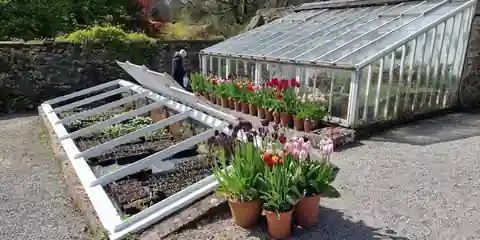 How to read a planting calendarAnd remember the date itself is a probability
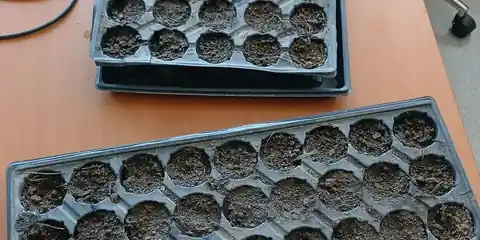 Starting seeds indoorsThe transplant date is still frost-gated
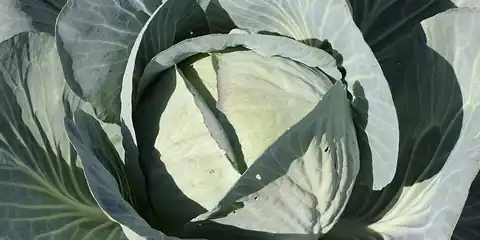 Floating row covers: frost protection, pest exclusion, and the one ruleThe three things a row cover does
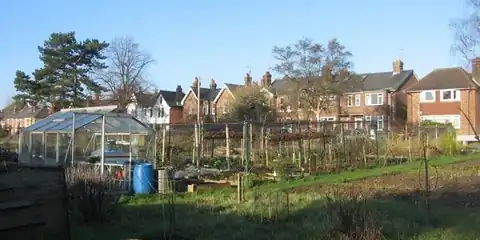 When to pick your harvest, and how to make it keepThe long games
Photo credits
How to read a planting calendar. Photo: Oliver Dixon · CC BY-SA 2.0, via Wikimedia Commons.
Starting seeds indoors. Photo: Furkan Akkurt · CC BY-SA 4.0, via Wikimedia Commons.
Floating row covers: frost protection, pest exclusion, and the one rule. Photo: George Chernilevsky · Public domain, via Wikimedia Commons.
When to pick your harvest, and how to make it keep. Photo: Sebastian Ballard · CC BY-SA 2.0, via Wikimedia Commons.


What grows here
106 of our 129 plants fit Düsseldorf, and 13 more with a little care.
Fits here · 106
Fruiting vegetables · 10, Salad & greens · 9, Roots & tubers · 8, Beans & peas · 9, Onions & garlic · 4, Perennial vegetables · 4, Herbs · 19, Fruit & berries · 21, Flowers · 11, Cover crops & soil builders · 11
Fruiting vegetables · 10
Salad & greens · 9
Herbs · 19
Fruit & berries · 21
Flowers · 11
+3 moreShow fewer
Cover crops & soil builders · 11
+3 moreShow fewer
Fits with care · 13
Here it gets only July and August at the 18 °C65 °F or so it grows in, fewer than the 3 months in a row it needs. Start it early indoors, choose a quick variety or give it cover (why) · 6
Warmer than its usual range, so look for a variety rated for zone 8b (why) · 4
Runs to seed in July to August, so time it to come ready in the other months (why) · 2
Onions bulb by day length: grow long-day onions this far from the equator (why) · 1
When lettuce and spinach run to seed here, these summer greens keep growing: Malabar spinach, New Zealand spinach, Amaranth, Sweet potato (why)
Not here · 9
Winters here (zone 8b) are colder than it survives (why) · 9
Nearby cities
The nearest cities with a frost page here, and how their last-frost dates compare.
- Duisburg, Germanylast frost by April 18
- Essen, Germanylast frost by April 6
- Cologne, Germanylast frost by March 26
- Brussels, Belgiumlast frost by April 10
- Rotterdam, Netherlandslast frost by April 14
- Amsterdam, Netherlandslast frost by April 6
Other cities in Germany.
- Frankfurt, Germanylast frost by March 30
- Mannheim, Germanylast frost by April 13
- Stuttgart, Germanylast frost by March 31
- Hamburg, Germanylast frost by April 24
- Munich, Germanylast frost by April 9
- Berlin, Germanylast frost by April 8
When do I plant? · Where the dates come from
More ways Milpa can help
When do I plant? · What grows well together? · What can I plant now? · Something wrong in the garden? · Heard a tip?
With a free account: Plan your garden · Keep a garden diary