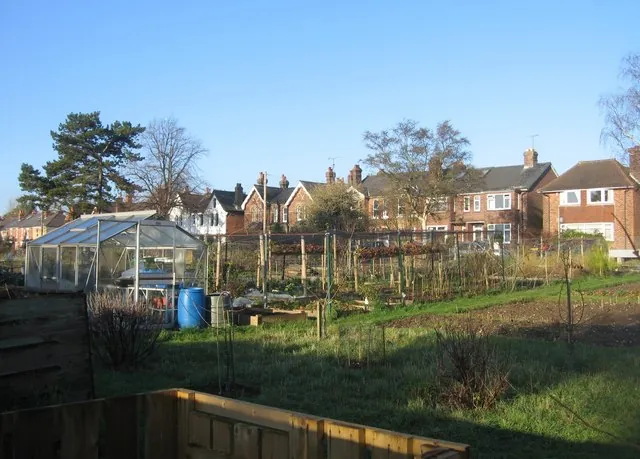
When to pick your harvest, and how to make it keep
The picking signs for each crop, which ones must cure before they'll keep, the three kinds of pantry, and what should never see the refrigerator.
Photo: Sebastian Ballard · CC BY-SA 2.0, via Wikimedia Commons.
What you need
Gentle hands. Bruised produce rots first, and rot spreads in storage.
A warm, airy spot for curing onions, garlic and potatoes
Somewhere cool and dark, even if it’s just a box in the basement
To make a harvest last, pick at the right sign, cure the crops that need it, and match each one to the storage it wants. The signs are specific and worth learning, because a vegetable picked at its moment keeps for months, and the same one picked wrong keeps for days.
How do I know something's ready to pick?
Each crop has its signal, and the extension guidance is usefully blunt about them:
Tomatoes - when the color is uniformly pink or red, with no blotches.
Snap beans - two to three weeks after bloom, while the seeds inside are still immature; a bean showing lumps has gone past.
Carrots - when the shoulders reach about 2.5 cman inch across; they’ll wait in the ground after that.
Onions - when the necks are tight and the outer scales dry, usually after the tops flop.
Potatoes - when the vine dies back; the skins set in the ground during those last weeks.
Winter squash - when the shell is hard enough to resist a thumbnail, and always before a frost catches the fruit.
Two habits matter as much as the timing. Handle everything like eggs, because the less a vegetable is bruised, nicked or dropped, the longer it lasts. And store only sound produce. One rotting onion soon spreads its rot to the others.
Which crops must cure before they keep?
A few crops need a deliberate rest between the garden and the shelf, and skipping it is the commonest reason “storage crops” don’t store. The corpus carries the allium version as a graded rule, mechanism and all.
If you skip this, it still grows, just less well. The planner suggests it.
How it works: At harvest the bulb's neck and outer scales are still moist living tissue and the neck is an open channel into the bulb, so curing in warm moving air dries the neck shut and the outer scales to a papery protective skin, removing the wet tissue that storage rots colonise and sealing the neck they enter by; an uncured bulb goes into storage with a moist open neck and soft scales, and decays.
Evidence: checked against 2 sources in the research-based literature.
Allow bulbs to dry until the neck is dry and the outer skin is papery, approximately two to three weeks
Remedy
After lifting, spread the bulbs in a single layer or hang them in bundles in a warm, shaded, well-ventilated place out of direct sun and rain, and leave them until the neck is dry and tight and the outer skin is papery. That takes roughly two to four weeks for onions (a warm 75-90 °F speeds it) and two to three weeks for garlic. Only then trim, and keep the cured bulbs in mesh bags or shallow boxes in a cool, dry, well-ventilated spot. Handle gently throughout, as bruising also seeds storage rot.
Potatoes get their own version of the same pause. Two weeks somewhere around 10-16°C50-60°F lets the skin thicken and small nicks heal over before storage. Winter squash mostly needs no curing at all, only full hardness at picking, and the acorn types actively resent it, so don’t cure those.
Where should each crop live once it's picked?
Storage comes down to two dials, temperature and humidity, and the crops sort into three combinations:
Cool and dry - around 10-16°C50-60°F, ~60% humidity: winter squash and pumpkins. A spare room’s closet or a cool basement corner does it.
Cold and dry - 0-4°C32-40°F, ~65%: onions, once cured.
Cold and moist - 0-4°C32-40°F, ~95%: the roots (carrots, beets, parsnips) and cabbage. The home trick for “moist” is a perforated plastic bag in the refrigerator.
Cured garlic needs none of the three. It keeps at room temperature, hardneck for three or four months and softneck for six to eight.
Matched right, the numbers are generous: carrots can hold eight months, potatoes six, winter squash two to six, cured onions four. Cold can improve a crop, too. A parsnip sweetens after a couple of weeks near 0°C32°F, which is why the old-timers left them for after the frosts.
What should never go in the fridge?
The fridge is one specific climate, cold and fairly dry, and it suits only the crops that want exactly that. Tomatoes never go in. Cold wrecks their texture and flavor. A ripe one keeps five days in a cool spot in the kitchen. Potatoes ask for dark as much as cold, for a reason the corpus grades.
Potato tubers that catch light while growing (wherever soil settles or washes away and shallow tubers are left uncovered) turn green and become bitter and toxic, so the crop must be kept covered with soil.
This one is about eating safely, not how the plant grows. The planner suggests it.
How it works: Tuber tissue exposed to light produces chlorophyll and, in that same tissue, synthesises the toxic glycoalkaloids solanine and chaconine, so soil mounded over the developing tubers keeps light off them and prevents both the greening and the toxin from forming.
Evidence: checked against 2 sources in the research-based literature.
Green skin occurs when potato tubers experience exposure to light
Remedy
Hill the crop. Once the stems are roughly 8-12 inches (20-30 cm) tall, draw loose soil up around the base of the plants to cover most of the stem and bury any shallow tubers, and repeat two or three times through the season so the tubers stay covered. Green tubers are bitter and should not be eaten; the green signals the toxin is present and is not reliably removed by peeling, so the defense is to keep light off the tubers in the first place, in the ground and again in dark storage.
The same mechanism that greens a tuber in the garden greens it in a fruit bowl by the window. Store potatoes dark, cool and unwashed, and cut away any green before cooking.
Which harvests reward patience?
A couple of harvests are measured in years, and for those, restraint is the harvest skill.
Do not harvest asparagus at all the first year after planting crowns. When harvest begins (the second or third spring, depending on the source you follow), keep it short. Pick for about two weeks in the first harvest year, no more than a month, then let every later spear grow out. From the fourth year on, harvest can run eight to ten weeks. After harvest ends, let the spears grow into ferns and leave them standing, because the ferns are what feed the crown for next year.
If you skip this, it still grows, just less well. The planner suggests it.
How it works: Every spear is drawn from energy stored in the crown, and the ferns are what refill that store. The fern's photosynthesis is banked underground to produce the following year's spears. A young planting is still expanding its root storage system, so cutting its spears removes the shoots that would have become ferns, and excessive removal of spears weakens the plants. Restraint in the establishment years is what builds a crown strong enough to bear a full harvest for decades.
Evidence: checked against 2 sources in the research-based literature.
During the fourth year and thereafter, the spears may be harvested from their first appearance in the spring through May or June (as long as 8 to 10 weeks).
Remedy
Year one after planting crowns: harvest nothing and let everything fern out. In the first year you do harvest, pick for about two weeks only, a month at most, then stop. From the fourth year on, harvest from first spears through May or June, about eight to ten weeks. Every year, once harvest ends, let the remaining spears develop into ferns and take care of them; they are next year's crop being banked.
This one is about eating safely, not how the plant grows. The planner suggests it.
How it works: The leaf blades hold a toxic concentration of oxalic acid (and, per NDSU, anthraquinone glycosides), which the edible petioles carry only in trace amounts. Oxalic acid binds calcium and can damage kidney function; eating the blades causes cramping, nausea and, in quantity, can be fatal. The stalks are safe because the toxins concentrate in the leaf.
Evidence: checked against 5 sources in the research-based literature.
The leaves, however, contain a toxic amount of oxalic acid and are poisonous. The ensuing cramps, nausea and sometimes death from ingestion suppressed interest in the plant for about two hundred years.
If your problem is the opposite one, with everything ripe in the same fortnight, that’s a sowing problem. The succession planting guide solves it at the calendar end, where it’s cheap.
Further reading
Good places to read more about the technique on this page. The grade on each card comes from that card’s own sources.