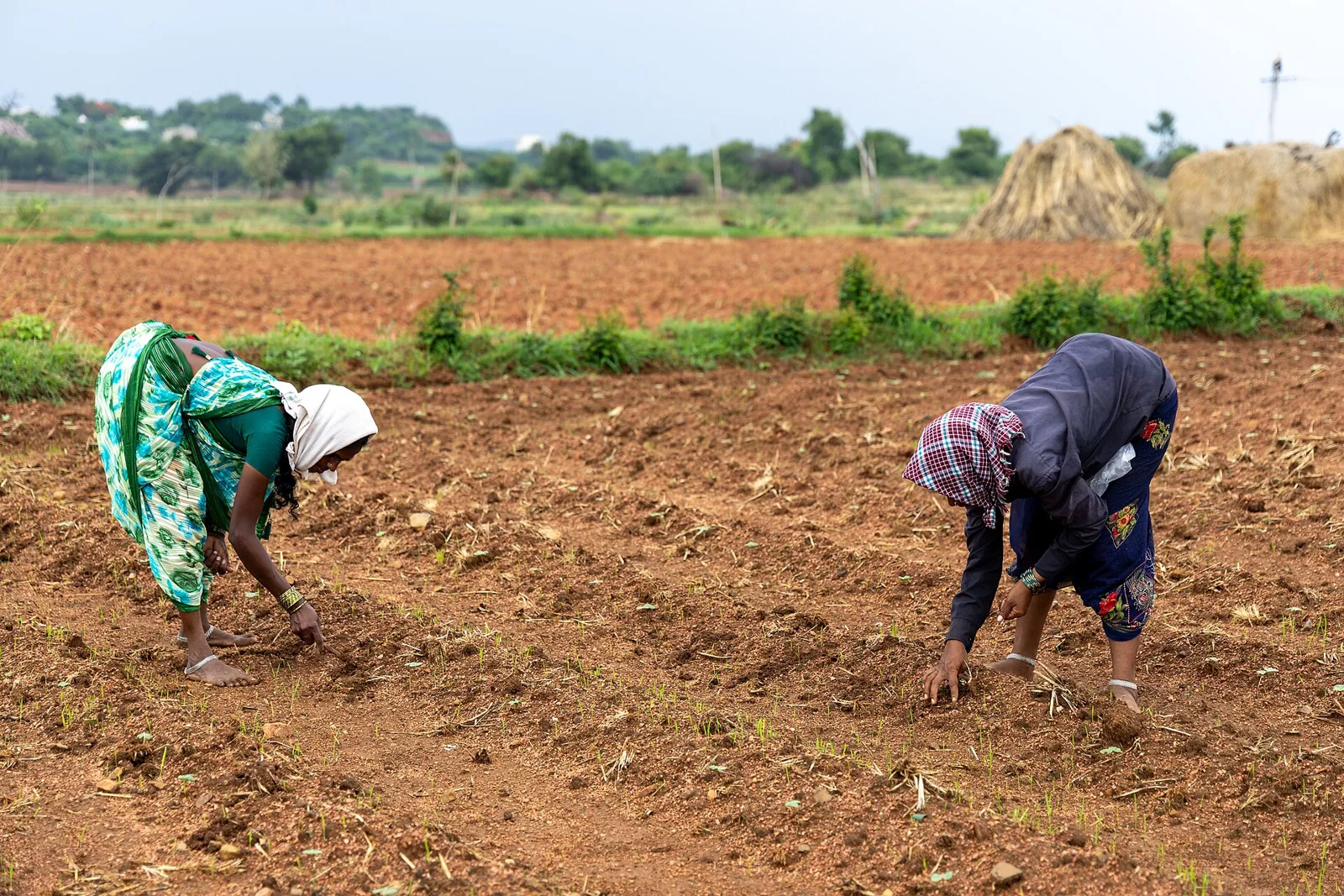
A seed comes up when a few things line up - soil in its germination range, steady moisture, and for some seeds a dormancy broken first or a glimpse of light. Here is what each kind asks for, and why.
Half of "my seeds didn't come up" is timing and depth, not bad seed. A seed is a packed lunch and a switch: it has the food to make a seedling, and it waits for the right signal to spend it. Give it the conditions it's waiting for and it comes up; miss them and it sits, or rots, or exhausts itself reaching for a light it can't find. Here's what the common signals are, and how to give each one.
Sow by the soil, not the calendar
The single most useful habit is to stop sowing by the date and start sowing by the soil. Every kind of seed has a soil-temperature range it germinates in, and the calendar is only a rough proxy for it:
PromisingA seed comes up from the warmth of the soil, not from a date on the calendar. Each kind of seed has a soil-temperature range it germinates in; sown into ground colder than that range it comes up slowly and patchily or rots before it can emerge, and ground hotter than the range stalls it too.
suboptimal if ignored → advise
Mechanism: Germination is driven by temperature-dependent enzymes that mobilise the seed's stored reserves, so in soil below the species' range those enzymes work too slowly for the seedling to emerge before soil fungi rot the water-swollen seed, and in soil above the range that same enzyme machinery is suppressed - which is why the reliable signal is the soil's own temperature, not the day of the year.
Evidence: confirmed against 2 sources in the research-based literature.
the 2 sources
OSU Extension Service / J. F. Harrington (Dept. of Vegetable Crops, Univ. of California, Davis), 'Soil temperature conditions for vegetable seed germination', extension.oregonstate.edu/gardening/soil-compost/soil-temperature-conditions-vegetable-seed-germination (published April 2013, reviewed 2024; fetched in-container 2026-09-20, read 2026-09-20): the table 'Days to appearance of seedlings at various soil temperatures' gives an optimum soil temperature per crop (e.g. bean optimum 80 F, lettuce 75 F, asparagus 75 F) and marks 'Little or no germination' at the cold end of each crop's row (e.g. bean at temperatures below 50 F). It states the germination range but does not state the cold-soil rot mechanism, which the Wisconsin source below supplies.
UW-Madison Extension, Wisconsin Horticulture / Lisa Johnson, 'When Is the Right Time to Plant Vegetable Seeds? Check Soil Temperature', hort.extension.wisc.edu/articles/when-is-the-right-time-to-plant-vegetable-seeds-check-soil-temperature (revised January 2025; fetched in-container 2026-09-20, read 2026-09-20): 'In our rapidly changing climate, a calendar date is not the best predictor for an extra early onset of spring weather in March or an extremely late, cold and wet April'; 'A better method to gauge when to put seeds in the ground is to test soil temperatures'; 'If you plant too early in cold soil, the seed may rot, but if it does germinate, it will be slow to do so and likely to produce stunted plants that are more prone to disease.'
remedy
Read the soil, not the calendar: a soil thermometer pushed to sowing depth for a minute gives the number. Sow each crop once the soil sits in its germination range - warm-season crops wait for warm ground even after the frost has passed, and cool-season crops go into cool soil on purpose - or start seed in a warm flat indoors and set the young plants out. Each plant's own range is on its page.
Read the full rule → · open in the planner ↗
A soil thermometer pushed to sowing depth for a minute settles it. Warm-season crops - beans, squash, cucumbers, corn - want warm ground and will sulk or rot in cold soil even after the frost has passed, which is a mistake the frost date alone will walk you straight into. Cool-season crops are the mirror image: lettuce, peas, spinach and radishes germinate in cool soil and are sown early on purpose. Each plant's own range is on its page, so you can check the ground against the number rather than guessing.
Some seed needs waking up first
Most vegetable seed will germinate as soon as it's warm and damp. But some seed - a lot of perennials, wildflowers and hard-coated natives - carries a built-in dormancy that has to be broken before it will do anything at all, and that step takes time you have to plan for:
PromisingSome seed will not germinate straight from the packet: it carries a built-in dormancy that a pre-sow treatment has to break first. A hard-coated seed is scarified or soaked so water can get in; a seed with internal dormancy is cold-moist stratified - chilled damp for weeks - before it will come up. The treatment has to be started far enough ahead of the sowing date to finish in time.
suboptimal if ignored → advise
Mechanism: A hard, water-impermeable seed coat holds the seed dormant by blocking imbibition, so nicking, abrading, or soaking the coat is what lets water reach the embryo; a seed with physiological dormancy stays shut until a period of cold, moist chilling lets its germination-inhibiting hormones dissipate - so each treatment takes its own span of time, and starting it late leaves the seed still dormant at sowing.
Evidence: confirmed against 2 sources in the research-based literature.
the 2 sources
Penn State Extension / Tianna DuPont, 'Seed and Seedling Biology', extension.psu.edu/seed-and-seedling-biology (updated January 14, 2025; fetched in-container 2026-09-20, read 2026-09-20): 'Seeds might have a hard or thick seed coat (physical dormancy). This can be broken by soaking or scarifying (scratching the surface) the seed'; and on imbibition, 'The seed rapidly takes up water and the seed coat swells and softens.'
UW-Madison Extension, Wisconsin Horticulture / Bruce Spangenberg, 'Plant Dormancy a Dependable Process', hort.extension.wisc.edu/plant-dormancy-a-dependable-process (fetched in-container 2026-09-20, read 2026-09-20): 'A tough seed coat prevents water uptake and seed germination'; 'Seeds collected from native plants are often recommended to be mixed with abrasive sand or even roughened with a file; this breaks physical dormancy'; and on cold stratification, 'After exposure to a certain length of winter cold, abscisic acid levels dissipate in seeds', with 'Typically, minimum temperatures range from upper thirties to 40 degrees Fahrenheit.'
remedy
Check the plant's page for the treatment it needs. Scarifying (nick, abrade, or a hot-water/acid treatment) and soaking are done right before sowing; cold-moist stratification takes weeks, so start it well ahead - about six weeks before the intended sowing date is a safe general lead, though the exact period is species-specific and is on each plant's page. Fall-sowing outdoors lets winter do the chilling for hardy natives.
Read the full rule → · open in the planner ↗
The two kinds of dormancy call for two different treatments. A hard, water-tight seed coat is dealt with just before sowing: nick it, rub it on sandpaper, or soak it so water can finally get in. Internal dormancy is slower - the seed needs weeks of cold, damp chilling ("stratification") before it will respond to warmth, so if a packet says to stratify, start it well ahead of when you mean to sow, or sow in autumn and let the winter do it. The plant's page carries the exact treatment and how long.
A few seeds need light, so don't bury them
Depth has a twist that trips people up: a handful of seeds actually need light to germinate, so the usual "cover it up" instruction is exactly wrong for them.
PromisingA few kinds of seed need light to germinate, and burying them stops them coming up. Sow these on the surface - pressed into firm, moist soil and left uncovered, or barely dusted over - rather than at the depth a larger seed would take.
suboptimal if ignored → advise
Mechanism: These seeds carry the light-sensing pigment phytochrome, which must catch light to switch on the hormone cascade that releases the seed to germinate, so a seed buried past a few millimetres sits in the dark with that switch never thrown and stays dormant.
Evidence: confirmed against 1 source in the research-based literature.
the source
North Carolina Extension Gardener Handbook, ch. 13 'Propagation' / Anthony V. LeBude & Frank A. Blazich (NC State Extension, 2022), content.ces.ncsu.edu/extension-gardener-handbook/13-propagation (fetched in-container 2026-09-20, read 2026-09-20): 'When sowing light-requiring seeds, sow them on the soil surface'; the plants it lists as requiring light for germination are 'ageratum, begonia, browallia, impatiens, lettuce, and petunia'; and 'Extremely fine seeds such as carrot, petunia, and snapdragon should not be covered, but simply dusted on the surface of the germinating medium and watered with a fine mist.' The page states the practice, not the phytochrome mechanism.
remedy
Press light-requiring seed onto firmed, moist soil or medium and leave it uncovered or only barely dusted, then keep the surface damp - a seed sitting on top dries out fast and a fine mist rather than a heavy watering keeps it in place. The plant's page says whether it needs light; a seed that needs darkness is the opposite and is covered as usual.
Read the full rule → · open in the planner ↗
These you press onto firm, moist soil and leave uncovered or barely dusted, then keep the surface damp with a light mist - a seed sitting on top dries out fast. The plant's page tells you which way a seed goes; most seeds are the ordinary kind and are covered as usual, and a few, like basil, actually want darkness and must be covered.
How deep, and does old seed still work
For every other seed, depth is a simple rule of thumb: sow about two to three times the seed's own width. A big bean goes down a good inch; a fine carrot or lettuce seed is barely covered. Too deep and a small seed spends its whole packed lunch reaching upward and never breaks the surface - the same failure as burying a light-lover, by a different route.
Old seed is worth a thought too. Seed doesn't keep forever, and how long it stays worth sowing varies a lot by crop - onion and parsnip fade within a year or two, while squash and tomato can keep for several. Where the corpus knows a crop's storage life it's on the plant's page. If you're unsure, a quick test settles it: fold ten seeds into a damp paper towel, keep it warm for a week or two, and count how many sprout - that's your rough germination rate, and it tells you whether to sow thicker or just buy fresh.