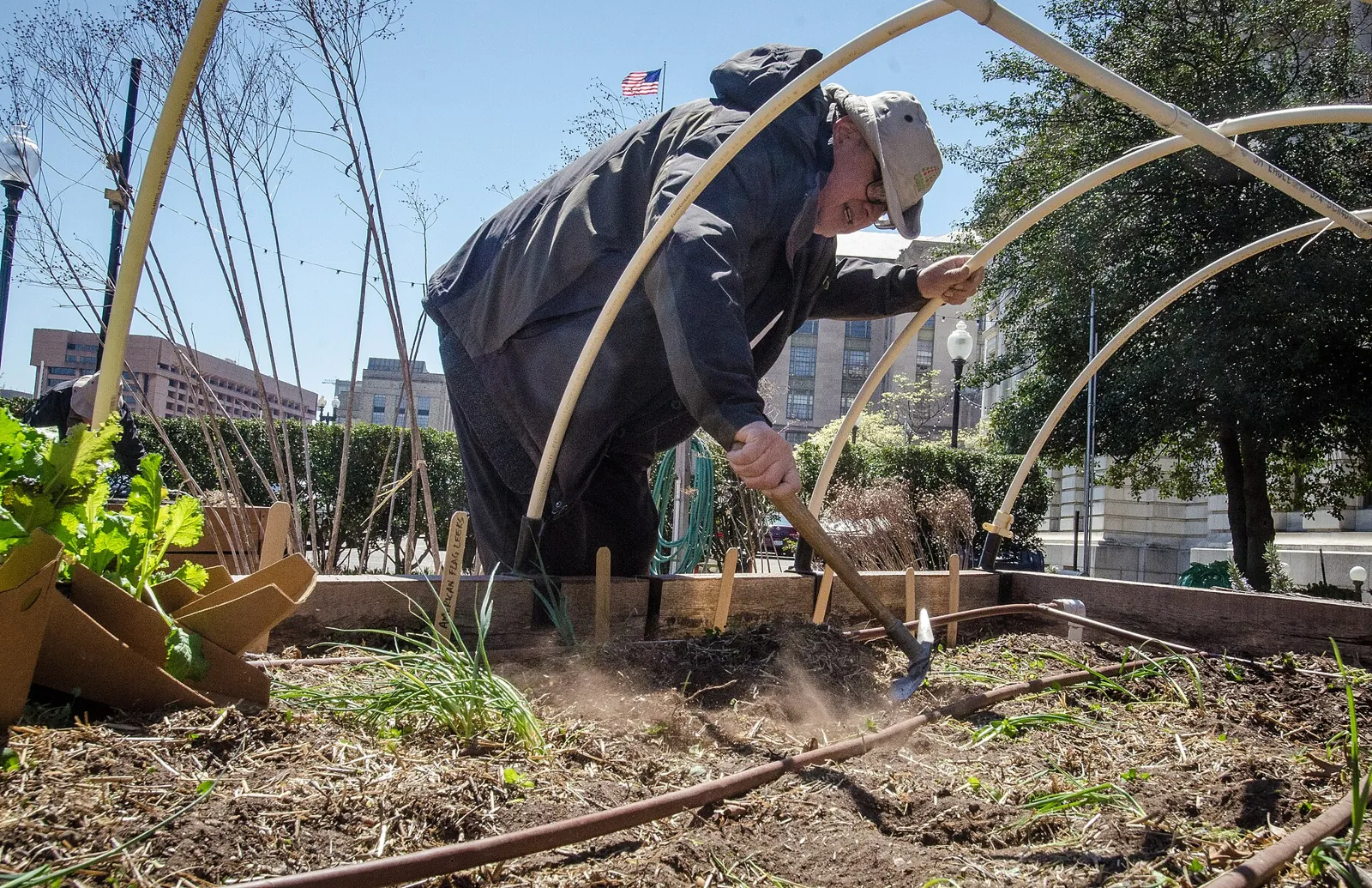
Moving a seedling into the garden is where a lot of them get set back or killed. How to harden off, handle, and set a transplant, plus the one crop you plant deeper than it grew, and the reason.
Photo: USDAgov · Public domain, via Wikimedia Commons.
What you need
Seedlings that have been hardened off - not moved straight from the windowsill to full sun
A cloudy day or an evening to plant, so they don’t wilt in the first hours
Water, to settle each plant in as you go
A seedling you started indoors, or bought at the garden center, has spent its whole life in gentle, sheltered conditions. The move into the open garden is a shock, and it’s where a surprising number of plants get badly set back or killed, usually just by being moved carelessly. Done right, transplanting is quick and the plant barely notices. Here’s the sequence.
What is hardening off, and do I have to do it?
The single most important step happens before you plant anything: give the seedling a week or so to get used to the outdoors gradually. Set it outside in a sheltered, part-shade spot for a couple of hours the first day, then a little longer and a little sunnier each day, bringing it in at night at first. A plant taken straight from a windowsill to full afternoon sun can scald and stall in an afternoon; a hardened-off one shrugs off the move. If you started your own seeds, the starting seeds indoors guide covers the weeks that lead up to this.
How do I move a seedling without hurting it?
Pick it up by a leaf or the root ball. Never hold it by the stem. A crushed stem is a dead plant; a torn leaf is survivable. Ease it out of its pot. Pulling it up by the top tears it.
Plant in the evening or on an overcast day. Out of direct sun, the seedling settles its roots before it’s asked to cope with heat and bright light.
Set it at the same depth it grew, for almost everything. The soil line on the stem meets the soil line in the bed. Then water it in right away, enough to settle the soil around the roots and close air pockets.
Is it true you bury a tomato deeper than other plants?
There’s exactly one common seedling you deliberately plant lower than it was growing, the opposite of the rule above:
A tomato transplant goes into the ground deeper than it grew in its pot, buried up to its first leaves. It does not go in at the soil line it came out of.
If you skip this, it still grows, just less well. The planner suggests it.
How it works: A tomato's stem forms roots along whatever length of it is buried in moist soil. Setting the plant deep therefore converts stem into root, and the plant ends up with a larger root system than the one that came out of the pot.
Evidence: checked against 1 source in the research-based literature.
The stem of a tomato transplant may be buried in soil up to the first leaves (or more if the plant is spindly)
Plus one working note on how the sources were read.
Remedy
When you set it out, bury the stem up to the first leaves, or deeper still if the plant is leggy from being started indoors. This is the one seedling you plant lower than it was growing.
Pinch off the lowest leaves and set the plant so it’s buried up to the first remaining ones, deeper still if it got tall and leggy indoors. A tomato grows new roots all along the buried stem, so this turns a weak, stretched seedling into a stronger-rooted plant. This is a tomato trait; don’t generalize it. Most other seedlings resent a buried stem and are set at their original soil line. Plant your peppers, squash, and the rest at the depth they came out of the pot.
What does a transplant need in its first week?
A transplant’s roots are disturbed and it can’t yet drink normally, so keep the soil evenly moist for the first week or two while it re-establishes. This is also when steady watering heads off other trouble down the line, from wilting to blossom-end rot on tomatoes. A little wilting on the first hot afternoon is normal and usually passes by evening; a plant still flat the next morning needs shade and water. Within a week or two the roots take hold and the plant starts growing again. The first bed walkthrough puts transplanting in the context of a whole first season.
Further reading
Good places to read more about the technique on this page. The grade on each card comes from that card’s own sources.