Frost dates for Wrightwood, California
Half of years have their last spring frost by May 16, but 1 year in 10 still frosts after June 9.
The pale stroke is about 151 days with no frost, in half of years.
From NOAA’s own record at Wrightwood, 1991–2020 · Well established
How to read this
- The pale stroke is the season with no frost.
- The marked line is when frost is likely: more marks, more likely.
- It reads clockwise from January at the foot, with midsummer at the top.
A frost date is really a percentile from 30 years of records at a nearby weather station
in about half of years a frost still comes after the median date. Both numbers are below, so you can choose the risk yourself.
The odds
Last spring frost
How often a frost still comes on or after each date.
- 1 year in 10
- June 9
- 1 year in 5
- June 3
- 3 years in 10
- May 29
- 2 years in 5
- May 22
- Half of years (the median)
- May 16
First fall freeze
How often the first freeze comes on or before each date.
- 1 year in 10
- September 25
- 1 year in 5
- October 1
- 3 years in 10
- October 5
- 2 years in 5
- October 9
- Half of years (the median)
- October 13
- Growing season
- about 151 days
- Hardiness zones nearby
- 7b, 8a, 8b
- Summer days
- a usual high of about 27 °C81 °F
- Lettuce and spinach run to seed
- June to August, in hot, long days (how we know)
From NOAA’s own record at Wrightwood, 1991–2020 · Well established
NOAA NCEI 1991–2020 Climate Normals, the Wrightwood station (listed by NOAA as Wrightwood, USC00049822), at 34.36, -117.64. These are that station’s own records, unshifted. The further your garden is from it, the less exactly they describe your ground. The planner finds the nearest station to your garden and lowers its confidence with distance, so no number is presented as if it were measured in your garden.
Cold air also pools in low ground on the clear, still nights when frost happens, so a hollow can freeze while a slope a few hundred feet away does not. No table can know that about your garden. A few seasons of your own logged frosts can.
Summer and rain
A growing garden needs about 25 mm1 in of water a week, rain and watering together
Here is what a normal month brings.
- Nearly every drop is yours
- May to September: rain brings less than a quarter of the water a growing garden needs, about 25 mm1 in a week (how we know)
Month by month
Each month’s usual high and low at Wrightwood, California
Each month’s usual high and low, 28 °C83 °F to -4 °C25 °F
- January
- high ~9 °C48 °F · low ~-4 °C26 °F · rain ~111 mm4.4 in
- February
- high ~9 °C48 °F · low ~-4 °C25 °F · rain ~125 mm4.9 in
- March
- high ~12 °C54 °F · low ~-2 °C29 °F · rain ~47 mm1.9 in
- April
- high ~16 °C60 °F · low ~0 °C32 °F · rain ~20 mm0.8 in
- May
- high ~21 °C69 °F · low ~4 °C39 °F · rain ~20 mm0.8 in
- June
- high ~26 °C78 °F · low ~7 °C44 °F · rain ~2 mm0.08 in
- July
- high ~28 °C83 °F · low ~11 °C53 °F · rain ~27 mm1.1 in
- August
- high ~28 °C82 °F · low ~11 °C51 °F · rain ~7.9 mm0.3 in
- September
- high ~24 °C75 °F · low ~8 °C46 °F · rain ~9.7 mm0.4 in
- October
- high ~18 °C64 °F · low ~3 °C37 °F · rain ~31 mm1.2 in
- November
- high ~13 °C55 °F · low ~-2 °C29 °F · rain ~29 mm1.1 in
- December
- high ~9 °C47 °F · low ~-4 °C25 °F · rain ~105 mm4.1 in
Working with these dates
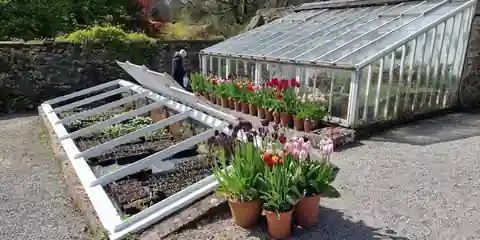 How to read a planting calendarAnd remember the date itself is a probability
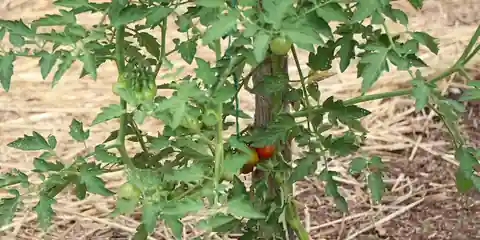 Growing tomatoes, starting with bush or viningPlanting: late, deep, and not before the frost is done
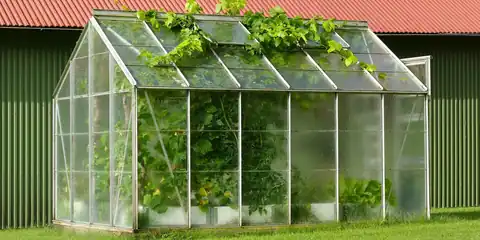 Cold frames and low tunnels for extra weeks of seasonWhat the structures actually buy
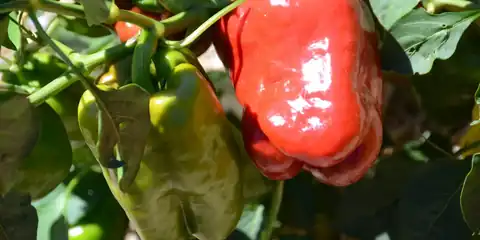 Saving seed that comes trueStart with the self-pollinators
Photo credits
How to read a planting calendar. Photo: Oliver Dixon · CC BY-SA 2.0, via Wikimedia Commons.
Growing tomatoes, starting with bush or vining. Photo: NPS · Public domain, via Wikimedia Commons.
Cold frames and low tunnels for extra weeks of season. Photo: W.carter · CC0, via Wikimedia Commons.
Saving seed that comes true. Photo: Rob Bertholf · CC BY 3.0, via Wikimedia Commons.


ZIP codes nearest this station
91759, 92358, 92371, 92372, 92397, 93563.
Nearby stations
The nearest stations and how their last-frost dates compare
Together they show how frost varies across your area.
- Lake Arrowhead, CAlast frost by May 5
- Anaheim, CAfrost is rare
- Fullerton Municipal Airport, CAfrost is rare
- Los Angeles Dwtn Usc Campus, CAfrost is rare
- Burbank Glendale Pasadena Airport, CAfrost is rare
- Santa Ana Fire Stn, CAfrost is rare
Other stations in California.
- Tustin Irvine Ranch, CAfrost is rare
- Long Beach Daugherty Field, CAfrost is rare
- Elsinore, CAlast frost by January 28
- Hawthorne Municipal Airport, CAfrost is rare
- U C L A, CAfrost is rare
- Culver City, CAfrost is rare
- Getty Center, CAfrost is rare
- Santa Monica Municipal Airport, CAfrost is rare
When do I plant? · Where the dates come from
More ways Milpa can help
When do I plant? · What grows well together? · What can I plant now? · Something wrong in the garden? · Heard a tip?
With a free account: Plan your garden · Keep a garden diary