
Three Sisters (Small Bed)
A polyculture - the species are claimed to help each other, and each claim below names its mechanism.
What binds this planting
The corpus partly backs this planting with 1 graded mechanism its members share:
Space it needs
At least 1.5 m²16.1 ft². A bed smaller than that does not get this guild quietly substituted for something else — the planner greys it out, says why, and offers the nearest adaptation that does fit.
Adapted from Three Sisters.
What it looks like planted
- 3 × common bean
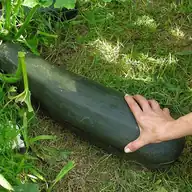
- 2 × summer squash
Between seasons
Nothing is left living in the bed over winter; the whole planting is re-established.
What it claims
bush squash suppresses weeds
Mechanism: A living cover keeps a leaf canopy over the ground: it intercepts light at the soil surface, so weed seedlings are shaded out before they establish, and it slows surface evaporation, so the soil holds more water. In a Three Sisters planting this is the squash's role — its broad leaves shade the bed.
Evidence: confirmed against 2 sources in the research-based literature.
the 2 sources
UMN Extension, 'Mulching for soil and garden health', extension.umn.edu/managing-soil-and-nutrients/mulching-soil-and-garden-health (read 2026-07-11): mulch 'Suppresses weeds'; 'Studies show that mulch reduces evaporation from the soil surface and helps soil hold water.'
Cornell Cooperative Extension (Warren Co. Master Gardener), 'Creating a Three Sisters Garden', warren.cce.cornell.edu/gardening-landscape/warren-county-master-gardener-articles/creating-a-three-sisters-garden (read 2026-07-11): 'The large, prickly squash leaves shade the soil, preventing weed growth' — the living-mulch role in Three Sisters.
beans improve the ground for next season
Mechanism: A legume fixes atmospheric nitrogen into its tissue as it grows. When the crop is killed and its residue decomposes, soil microbes mineralize that organic nitrogen — converting a form plants can't use into one they can — and release it for the next crop. How much depends on how well the legume grew, and it is lower on sandy soils.
Evidence: confirmed against 2 sources in the research-based literature.
the 2 sources
Penn State Extension, 'Growing Cover Crops for Nitrogen on Vegetable Farms', extension.psu.edu/growing-cover-crops-for-nitrogen-on-vegetable-farms (read 2026-07-11): 'When cover crops are killed and begin to decompose, nitrogen can be released from the residues back into the soil where it can feed the next crop'; 'Mineralization is the process where organic nitrogen, which is largely not available to plants, is converted by soil microorganisms' into a plant-available form.
Univ. of Wisconsin-Madison Extension (Crops & Soils), 'Late Summer Planting Legumes to Produce Nitrogen Credits for Next Year', cropsandsoils.extension.wisc.edu/articles/late-summer-planting-legumes-to-produce-nitrogen-credits-for-next-year (read 2026-07-11): 'The nitrogen credit depends on the amount of crop growth and when the legume was planted. Nitrogen credits are 50 lb N/a lower on sandy, coarse-textured soils.'
The honest version
Label as an adaptation, not as Three Sisters. It preserves the mechanisms and drops the crop that made it a subsistence system. The beans climb a trellis instead of corn, so the corn block - and the pollination mechanism that needs it - is gone.
Roles
A role is filled by whatever satisfies its predicate, not by a fixed species list. The canonical filler is the default; the alternatives are priced.
Support
- Filled by: Cattle Panel (a structure, not a plant)
- What the substitution costs: No biomass, no romance. About $20. Reusable across seasons.
- Alternatives: Sunflower
- What the alternative costs: Heavy N feeder competing with the fixer; requires ~30 day head start or vines pull it down; supports about 2 vines per stalk.
Fixer
- Canonical: Common Bean
- Alternatives: Runner Bean, Cowpea, Lima Bean
Cover
- Canonical: Summer Squash
- Alternatives: Summer Squash, Cucumber
What it costs the ground
Rotation history attaches to the ground, not the bed, so this is what the planner remembers about this patch after the guild comes out.
- Legumes: full load
- Cucurbits: full load