At least 4 m²43 ft². If your bed is smaller, the planner grays this plant team out, says why, and offers the nearest adaptation that fits. It never swaps in something else without telling you.
What it looks like planted
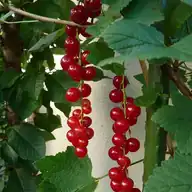
1 × Currant
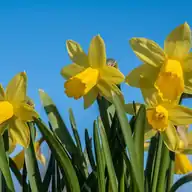
8 × Daffodil
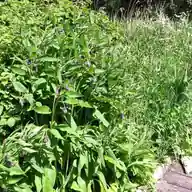
1 × Russian comfrey
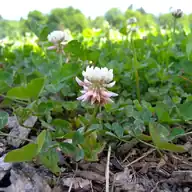
8 × White clover
3 × Yarrow
The real placement. The drip-line rings need about 8 ft across, and the planner draws the same layout.
Between seasons
The whole planting stays in place year-round.
What it claims
Bulb ring suppresses turfgrass competition at the stem
How it works: The flowers supply nectar and pollen that adult predators and parasitoids feed on, so a patch of them near a fruiting crop keeps those beneficial insects fed and close by to work the crop. The effect is real but not guaranteed. An insectary patch does not always suppress pests.
Evidence: checked against 1 source in the research-based literature.
Insectary plants are those grown to attract, feed, and shelter insect parasites (parasitoids) and predators to enhance biological pest control. Insectary plants provide nectar and pollen, which the adults of many natural enemy species need to consume.
Cutting the mulch plant and leaving it where it falls (chop-and-drop) returns its potassium-rich leaves to the surface as mulch
Most of the nitrogen converted by the beans will not be available to the corn and pumpkins the first year; the bean roots have to break down to release nitrogen. Corn is a heavy nitrogen [feeder].
N transferred from soybean to maize account for 2.4%–3.3% of the N uptake of maize.
What to keep in mind
Currants and gooseberries tolerate part shade and take the fruit-tree team's companion ring at berry scale. Ribes hosts white pine blister rust, and the planner flags this automatically; where the disease is regulated, black currant may be restricted, so check before planting. Honeyberry needs two different cultivars to set fruit and aronia sets alone; both take the ring at the same scale, aronia the tallest of these shrubs.
Who does what, and the swaps
Each job in this planting can be done by more than one plant. The usual choice comes first, and each swap says what it costs.
If you skip this, you lose real yield. The planner warns you.
How it works: Many fruit trees carry self-incompatibility alleles at a single locus. When a pollen grain shares an allele with the pistil it lands on, the pistil rejects it and no seed sets. A plant's own pollen always shares its alleles, so it cannot fertilize itself. Neither can a second tree of the identical variety, which is genetically the same. Fertilization needs pollen from a genetically distinct plant.
Evidence: checked against 2 sources in the research-based literature.
Japanese plum exhibits gametophytic self-incompatibility (GSI), a prezygotic reproductive barrier where genetically related pollen is rejected by the pistil ... governed by a polymorphic locus (S) ... Self-incompatibility occurs when the same S-allele is expressed in the haploid pollen grain and the diploid pistil.
Remedy
Plant at least two, and where the species needs a second cultivar make them different varieties. Two of the same will not pollinate each other.