Milpa Gardens
Open the planner

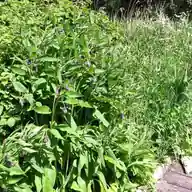
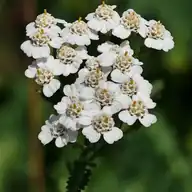
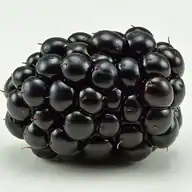
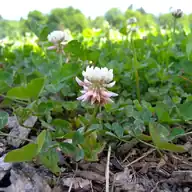
BlackberryWhite CloverRussian ComfreyYarrow

Blackberry Hedge

A perennial guild - a standing planting, not lifted between seasons.

The ring pattern adapted to a cane fruit grown as an edge.

What binds this planting

The corpus partly backs this planting with 1 graded mechanism its members share:

Plan this guild →

Space it needs

At least 3 m²32.3 ft². A bed smaller than that does not get this guild quietly substituted for something else — the planner greys it out, says why, and offers the nearest adaptation that does fit.

What it looks like planted

The real placement - the drip-line rings need about 7 ft across, the same layout the planner draws.

Between seasons

The guild is the standing planting; it is not lifted at all.

What it claims

understory insectary improves predator presence

A good hunch

Mechanism: The flowers supply nectar and pollen that adult predators and parasitoids feed on, so a patch of them near a fruiting crop keeps those beneficial insects fed and close by to work the crop. The effect is real but not guaranteed — an insectary patch does not always suppress pests.

Evidence: confirmed against 1 source in the research-based literature.

the source

UC Statewide IPM Program (UC IPM), 'Insectary Plants', ipm.ucanr.edu/environmental-protection-and-pesticide-stewardship/insectary-plants (read 2026-07-11): 'Insectary plants are those grown to attract, feed, and shelter insect parasites (parasitoids) and predators to enhance biological pest control. Insectary plants provide nectar and pollen, which the adults of many natural enemy species need to consume.' (UC IPM also notes 'insectary plants may not always help' suppress pests — consistent with the 'reasonably supported' framing.)

chop-and-drop mulch cycles K and builds soil organic matter

A good hunch

fixer feeds the canes in-season

Refuted

Evidence: confirmed against 3 sources in the research-based literature.

the 3 sources

Univ. of Arkansas Extension, 'Creating a Three Sisters Garden', uaex.uada.edu (read 2026-07-11): 'Most of the nitrogen converted by the beans will not be available to the corn and pumpkins the first year; the bean roots have to break down to release nitrogen. Corn is a heavy nitrogen [feeder].'

Hupe et al. 2021, Sci Rep 11:11424, 'Evidence of considerable C and N transfer from peas to cereals via direct root contact but not via mycorrhiza', pmc.ncbi.nlm.nih.gov/articles/PMC8169652 (read 2026-07-11): reports 'a mean N transfer rate of 8.4%, with a range of 2.7 to 22.5%, ... from N2-fixing legumes to non-N2-fixing mycorrhizal cereals' and 'N transfer rates of between 3.1 and 6.0% ... from soybean to maize'.

'Nitrogen uptake and transfer in a soybean/maize intercropping system in the karst region of southwest China', pmc.ncbi.nlm.nih.gov/articles/PMC5648690 (read 2026-07-11): 'N transferred from soybean to maize account for 2.4%–3.3% of the N uptake of maize.'

The honest version

Brambles grow from canes with no single trunk, so there is no bulb ring here — the turfgrass mechanism is scoped to a trunk or a shrub/vine stem, and a cane is neither. Blackberry is a Verticillium host: keep it out of any bed that has held tomatoes, potatoes, or other susceptible crops, and don't co-plant another host — the planner gates this. It bands partial on the insectary alone.

Roles

A role is filled by whatever satisfies its predicate, not by a fixed species list. The canonical filler is the default; the alternatives are priced.

Canopy

Fixer

Mulch producer

Insectary

Rules that gate it

Well established

Perennial woody guilds are not bed-scoped. Their ground entity is the drip-line ring.

suboptimal if ignored → advise

Mechanism: A tree's root zone expands for a decade and extends well past the canopy edge.

Evidence: settled without a trial - root architecture.

Read the full rule → · open in the planner ↗

Well established

Do not plant a juglone-sensitive species within the root zone of Juglans. The sensitive list is the hazard's own, and it is wider than the nightshades - it also carries apple and cabbage.

fatal if ignored → block

Mechanism: Juglans roots exude hydrojuglone, oxidized to juglone, a respiration inhibitor. nightshades are highly sensitive: wilt and death.

Evidence: confirmed against 2 sources in the research-based literature.

the 2 sources

UW-Madison / Wisconsin Horticulture (Joy, Hudelson & Jull, rev. 2024-02-28), 'Black Walnut Toxicity', hort.extension.wisc.edu/articles/black-walnut-toxicity (read 2026-07-13): 'Vegetables such as tomato, potato, eggplant and pepper ... are particularly sensitive to juglone'; 'The toxic effects of a mature black walnut tree can extend 50 to 80 feet from the trunk of the tree, with the greatest toxicity occurring within the tree's dripline.'

Iowa State Univ. Extension & Outreach, Yard and Garden FAQ, 'What plants are sensitive to the juglone produced by black walnuts?', yardandgarden.extension.iastate.edu (read 2026-07-13): juglone-sensitive plants include 'members of the tomato family (tomato, potato, eggplant, pepper).'

remedy

Plant it outside the walnut's root zone — the whole drip line and beyond. There is no soil treatment for juglone.

Read the full rule → · open in the planner ↗

Well established

Self-incompatible species require 2+ genetically distinct plants.

costly if ignored → warn

Mechanism: Many fruit trees carry self-incompatibility alleles at a single locus: when a pollen grain shares an allele with the pistil it lands on, the pistil rejects it and no seed sets. A plant's own pollen always shares its alleles, so it cannot fertilize itself — and neither can a second tree of the identical variety, which is genetically the same. Fertilization needs pollen from a genetically distinct plant.

Evidence: confirmed against 2 sources in the research-based literature.

the 2 sources

Penn State Extension, 'Pollination Requirements for Various Fruits and Nuts', extension.psu.edu/pollination-requirements-for-various-fruits-and-nuts (read 2026-07-11): 'Apple: Cross-pollination is always needed to produce adequate fruit crop'; 'Cherry: Sweet: Most varieties are self-unfruitful'; 'Those fruits listed as self-fertile will set fruit with their own pollen.'

'Pollen-Pistil Interaction in Response to Pollination Variants in Subtropical Japanese Plum (Prunus salicina Lindl.) Varieties', PMC9692414, pmc.ncbi.nlm.nih.gov/articles/PMC9692414 (read 2026-07-11): 'Japanese plum exhibits gametophytic self-incompatibility (GSI), a prezygotic reproductive barrier where genetically related pollen is rejected by the pistil ... governed by a polymorphic locus (S) ... Self-incompatibility occurs when the same S-allele is expressed in the haploid pollen grain and the diploid pistil.'

remedy

Plant at least two, and where the species needs a second cultivar make them different varieties — two of the same will not pollinate each other.

Read the full rule → · open in the planner ↗

Promising

Do not establish Verticillium-susceptible perennials (raspberries, strawberries, stone fruit) in ground that recently hosted Verticillium dahliae — either nightshades, or a logged planting of a Verticillium host (strawberry, raspberry or other bramble, or stone fruit).

costly if ignored → warn

Mechanism: Verticillium dahliae persists in soil as microsclerotia and infects a wide host range spanning nightshades and rose family. There is no in-ground cure once a susceptible perennial is planted, so it can wilt and die from inoculum an earlier host left behind — and because the reservoir family may differ from the victim's, the same-family rotation intervals miss it.

Evidence: confirmed against 3 sources in the research-based literature.

the 3 sources

Penn State Extension, 'Bramble Disease - Verticillium Wilt' (Kathy Demchak), extension.psu.edu/bramble-disease-verticillium-wilt (read 2026-07-12): 'Verticillium wilt is caused by two common soilborne fungi (Verticillium dahliae and Verticillium albo-atrum) that have a wide host range'; 'To minimize disease, choose a planting site with no known history of this problem. Avoid land recently planted with tomatoes, potatoes, eggplants, peppers, strawberries, raspberries, or stone fruits'; 'There are no effective fungicides for management once the plants are in the ground'; 'The number of years required to eliminate verticillium, especially the resting spores from the soil, is unknown.'

UMass Extension, New England Small Fruit Management Guide, 'Brambles - Diseases', ag.umass.edu/fruit/ne-small-fruit-management-guide/brambles/diseases (read 2026-07-12): 'Verticillium attacks a wide range of plants, including potatoes, tomatoes, peppers, eggplant and strawberries. It overwinters in the soil and on plant debris. Do not plant [raspberries following these crops].'; 'Non-host crops such as corn or wheat can help eliminate the fungus if grown for at least 2 years before planting raspberries.'

Host range / persistence corroborated by the source already cited on another rule here: NC State Extension, 'Verticillium Wilt of Tomato and Eggplant' (read 2026-07-11): 'The pathogen can survive in the soil without a host for up to 10 years in the form of structures called microsclerotia'; 'affects more than 300 host families.'

remedy

Site the perennial on ground with no recent nightshades, or choose one that is not Verticillium-susceptible. Extension advises growing a non-host — corn or a small grain — for at least two years first, without claiming that clears the soil. Once the perennial is planted there is no in-ground cure.
Read the full rule → · open in the planner ↗

All guilds