Soil myths about sand in clay, coffee grounds and banana peels
The most-repeated soil advice online is free, sounds sensible, and mostly does nothing. One tip makes your soil worse. Here's each one, and the boring thing that works.
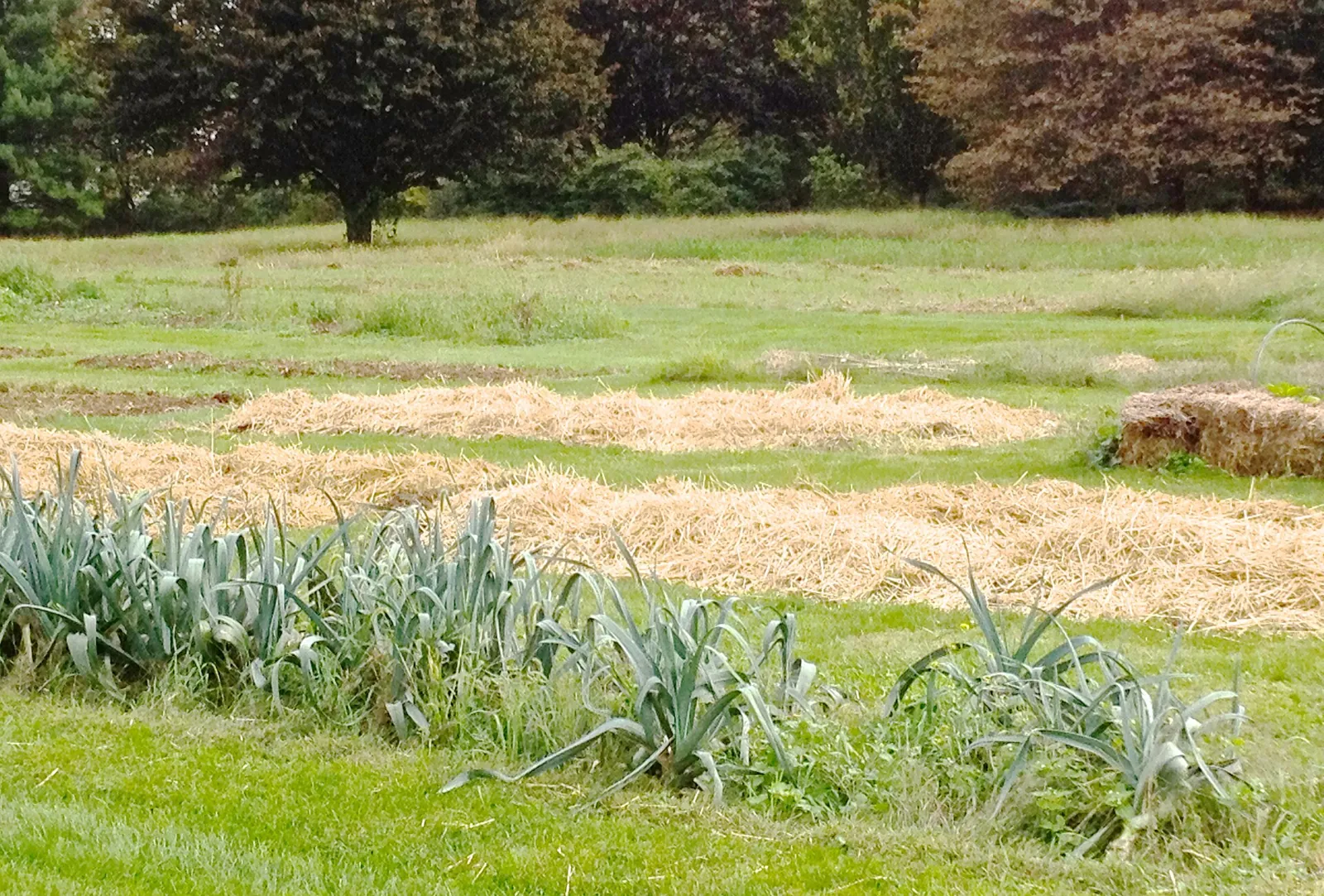
Photo: Final4one · CC BY-SA 3.0, via Wikimedia Commons.
What you need
A soil test, if you are about to change your soil because of something you read
Compost, which is the answer to more of this than anything else
Willingness to stop doing something that felt productive
Soil advice is the most abundant free content in gardening, and most of it follows the same shape. Take a household item you’d otherwise throw away, bury it, and something good happens. Eggshells, coffee grounds, banana peels, sugar, sand. It’s appealing because it costs nothing and feels resourceful.
Almost none of it works. One of the most popular pieces makes your soil actively worse, and it’s the one people put the most physical effort into.
Each of these is recorded here with what’s known, and each card says how sure the evidence is. Of these five cards, three have been checked against their sources by a person and two aren’t confirmed yet because a person has yet to read their sources.
Don't add sand to clay to "loosen" it. In the amounts anyone actually adds, the clay fills the gaps and you get a denser, worse-draining mix. Work in compost and mulch instead; organic matter is what builds the structure that drains.
What is known
A modest amount of sand in clay does the opposite of what is intended. The fine clay fills the gaps between the sand grains, giving a dense, poorly-draining mix closer to concrete than to loam. To actually shift the texture you would need sand in huge volumes (over half by volume), which is impractical for a bed. What does open clay is organic matter. Compost and mulch build aggregate structure and the pore space that drains. (Whether a gravel layer helps a container drain is a separate and more equivocal case; here the mechanism, clay filling the pore space between the sand grains, is well established.)
If you mix sand into clay, the clay particles will fill in all the open spaces between the sand particles and often the clay will act as a glue sticking all particles together, ultimately resulting in a more dense soil
Take this myth seriously. Unlike the others, it costs you a weekend and leaves the bed worse than it started.
The reasoning sounds airtight. Clay is dense and drains badly; sand is loose and drains freely; so sand plus clay should give you something in between. What happens is that the fine clay particles fill the gaps between the sand grains, and you get a dense, poorly-draining mix that behaves more like concrete than loam.
The catch is proportion. To really shift a soil’s texture toward sandy you’d need sand in enormous volume, more than half by volume, and nobody’s doing that to a garden bed with a wheelbarrow. At the amounts people add, you aren’t moving toward loam at all. You’re filling the pore space.
What opens clay is organic matter. Compost and mulch build crumb structure, little clumps with gaps between them, and water moves through that structure. It’s slower and less satisfying, and it works.
Coffee grounds haven't been shown to reliably lower soil pH, so they won't durably acidify your soil or make it blueberry-friendly. Put them in the compost, where they feed soil life; to lower pH, use elemental sulfur guided by a soil test.
What is known
Coffee grounds have not been shown to consistently lower soil pH, so they will not durably acidify soil to blueberry range. They make a good compost input, carrying carbon and nitrogen that feed soil organisms. To actually lower pH, use elemental sulfur guided by a soil test.
Coffee grounds can be beneficial to your soil. However, they have not been shown to consistently lower soil pH.
This one has a true fact at the front of it. Fresh coffee grounds are mildly acidic. That’s where the story comes from, and it’s why it sounds credible.
But brewing pulls most of those acids into the coffee you drank. Used grounds, which is what anyone has by the bucket, come out close to neutral, and their effect on soil pH is small and inconsistent. You won’t get a bed into blueberry range this way, however many bags the café gives you.
Used grounds are still perfectly good compost input or a thin mulch, for the organic matter and a modest slow trickle of nitrogen. They just won’t move pH. If you need to lower pH, use elemental sulfur, with the amount set by a soil test. That’s the same discipline the whole site applies to fertilizer.
Do banana peels or sugar feed the soil?
Burying banana peels feeds plants potassium (roses in particular).
Banana peels do give up their potassium quickly, but a few peels are an unknown and probably small dose, and nothing shows roses need it. If you think a plant is short of potassium, get a soil test; otherwise just compost the peels.
What is known
A banana peel's potassium is not locked away until the peel rots. Potassium in plant tissue is dissolved in water, so it washes out of plant residues quickly. In one study, 90% of a straw's potassium was released within three days. The weakness in the belief is the dose. Nothing we have read shows buried peels supply meaningful potassium to roses or anything else, and a soil test is how to find out whether a plant is short of it.
Potassium recycling is much more affected than P because K in plant tissue is soluble in water, because little or no K is incorporated into organic compounds, and plant P is mostly present in organic forms.
… as 90% of total K was released by the third day of the study.
Again there’s a true fact underneath: banana peels do contain potassium. The failure is in delivery. The potassium is locked inside undecomposed tissue, and a peel buried whole and fresh releases essentially nothing until it rots down, which takes months. In the meantime a shallow-buried peel invites flies, rodents and mold.
Compost the peel and it becomes a real, slow contribution. Bury it under a rose expecting a feed and you’ve buried some fruit waste.
Adding sugar or molasses to the soil makes tomatoes and other fruit sweeter.
Sugar in the soil won't sweeten your tomatoes. Fruit sugar is made in the leaves by sunlight. For sweeter fruit, you want a sweet variety, full sun, healthy foliage, and ripening on the plant (a little less water as it ripens helps concentrate it).
What is known
The sugar in a ripe tomato is made in the leaves by photosynthesis and moved into the fruit as it matures; extension sources call sugar-in-the-soil sweetening fiction. How sweet a tomato gets depends on the variety, on ripening on the plant, and on the balance of leaves to fruit, and holding back water as the fruit ripens can raise its sugars. The usual explanation that roots cannot absorb sugar at all is too strong. Roots do have sugar transporters, and in a lab a genetically engineered tomato line grown in glucose-fed soil made sweeter fruit. But nothing we have read shows sugar or molasses sweetening an ordinary garden tomato.
Deficit irrigation could increase the total soluble solids, reducing sugars, organic acids, vitamin C, and lycopene content of tomato fruits
This one fails at the plant’s actual plumbing, and the mechanism is so decisively wrong that it’s worth understanding.
Roots don’t absorb sucrose and carry it to the fruit. The molecule is far too large to enter a root intact, and soil microbes would eat it long before a root could try. The plant didn’t find the sugar in a ripe tomato. It made it, in the leaves, out of sunlight.
What decides sweetness is the cultivar you chose, the sunlight and healthy leaf area the plant has to work with, and letting the fruit ripen fully on the plant. Measured water restriction late in the season can concentrate it further. Every one of those is about leaves and light. None of them is about what you put in the ground.
Compost tea isn't the tonic or disease cure it's sold as. The effects in the field are patchy, and aerated teas have no documented disease protection. Additives like molasses can grow E. coli and Salmonella, so keep it off food crops unless you're sure of the method. Spreading the compost itself as mulch is the better bet.
What is known
Compost tea, made by steeping mature compost in water, is a source of nutrients, but its disease claims are weak. Batches vary widely; results that look good in the laboratory are more variable in the field; aerated teas have no scientifically documented effect as pathogen suppressors, while non-aerated teas show a trend to reduce how often foliar diseases appear, though not how severe they are. There is a real food-safety downside too. Sugars and other additives commonly put into aerated teas can feed E. coli and Salmonella, so unless the brewing method keeps human pathogens down, extension advice is to save the tea for plants you will not eat. Using the compost itself as mulch is simpler, and composted mulch has documented disease suppression of its own.
The old-fashioned compost tea is made by adding mature compost to unheated water and allowing the mixture to steep or brew. This serves as a source of nutrients.
Aerated compost teas have no scientifically documented effect as pathogen suppressors
This is the most interesting one, because a small part of it is real and the large part isn’t.
Steeping compost in water does extract some soluble nutrient, so a mild fertilizer effect exists. But it’s no larger than using the compost itself, which also builds soil structure the tea can’t touch. You’ve taken the good thing and extracted a weaker version of it.
The bigger claim, that spraying compost tea protects plants from disease, doesn’t hold up. Trials are inconsistent, and where any effect shows up at all it’s small. There’s also a real downside the enthusiasm tends to skip. A poorly-aerated or manure-based tea can grow harmful bacteria, and you don’t want to spray that on food crops.
Put the compost on the beds.
What's the common thread behind these soil myths?
Read those five together and the same structure shows up every time:
A true ingredient fact. Coffee is acidic. Peels contain potassium. Sand drains. None of these are lies.
A plausible-sounding jump to an effect, which is where it breaks. Usually that’s delivery (the nutrient is locked up), proportion (the sand is nowhere near enough), or plant physiology (roots don’t drink sugar).
No measurement, because the advice was never tested. It was passed along.
Once you can see that shape, you can weigh up the next tip you read without needing anyone’s permission. Ask what the claimed mechanism is, and ask whether anything measured it.
What to do for your soil instead is unglamorous and short: add organic matter, and test before you amend. Compost fixes drainage in clay, adds the nutrients the peel was supposed to, and improves the structure the tea never touched. A soil test tells you the one or two things compost can’t. That’s the whole list.