A seed germinates from the warmth of the soil, not from a date. Here is why cold ground rots warm-season seed, why cool-season crops want the opposite, and how to tell when the ground is ready.
The date is a proxy; the soil is the thing
Every seed packet and every planner talks in dates - "sow after the last frost", "start in April". A date is a convenient stand-in, but the thing a seed actually responds to is the temperature of the ground it's sitting in. Germination is run by enzymes, and enzymes have a temperature range they work in; each kind of seed has its own.
PromisingA seed comes up from the warmth of the soil, not from a date on the calendar. Each kind of seed has a soil-temperature range it germinates in; sown into ground colder than that range it comes up slowly and patchily or rots before it can emerge, and ground hotter than the range stalls it too.
suboptimal if ignored → advise
Mechanism: Germination is driven by temperature-dependent enzymes that mobilise the seed's stored reserves, so in soil below the species' range those enzymes work too slowly for the seedling to emerge before soil fungi rot the water-swollen seed, and in soil above the range that same enzyme machinery is suppressed - which is why the reliable signal is the soil's own temperature, not the day of the year.
Evidence: confirmed against 2 sources in the research-based literature.
the 2 sources
OSU Extension Service / J. F. Harrington (Dept. of Vegetable Crops, Univ. of California, Davis), 'Soil temperature conditions for vegetable seed germination', extension.oregonstate.edu/gardening/soil-compost/soil-temperature-conditions-vegetable-seed-germination (published April 2013, reviewed 2024; fetched in-container 2026-09-20, read 2026-09-20): the table 'Days to appearance of seedlings at various soil temperatures' gives an optimum soil temperature per crop (e.g. bean optimum 80 F, lettuce 75 F, asparagus 75 F) and marks 'Little or no germination' at the cold end of each crop's row (e.g. bean at temperatures below 50 F). It states the germination range but does not state the cold-soil rot mechanism, which the Wisconsin source below supplies.
UW-Madison Extension, Wisconsin Horticulture / Lisa Johnson, 'When Is the Right Time to Plant Vegetable Seeds? Check Soil Temperature', hort.extension.wisc.edu/articles/when-is-the-right-time-to-plant-vegetable-seeds-check-soil-temperature (revised January 2025; fetched in-container 2026-09-20, read 2026-09-20): 'In our rapidly changing climate, a calendar date is not the best predictor for an extra early onset of spring weather in March or an extremely late, cold and wet April'; 'A better method to gauge when to put seeds in the ground is to test soil temperatures'; 'If you plant too early in cold soil, the seed may rot, but if it does germinate, it will be slow to do so and likely to produce stunted plants that are more prone to disease.'
remedy
Read the soil, not the calendar: a soil thermometer pushed to sowing depth for a minute gives the number. Sow each crop once the soil sits in its germination range - warm-season crops wait for warm ground even after the frost has passed, and cool-season crops go into cool soil on purpose - or start seed in a warm flat indoors and set the young plants out. Each plant's own range is on its page.
Read the full rule → · open in the planner ↗
The gap between the proxy and the real thing is where crops fail. The frost-free date can arrive weeks before the soil is genuinely warm, and a warm-season seed sown on that date sits in cold, damp ground - the worst place for it.
Why cold soil rots a warm-season seed
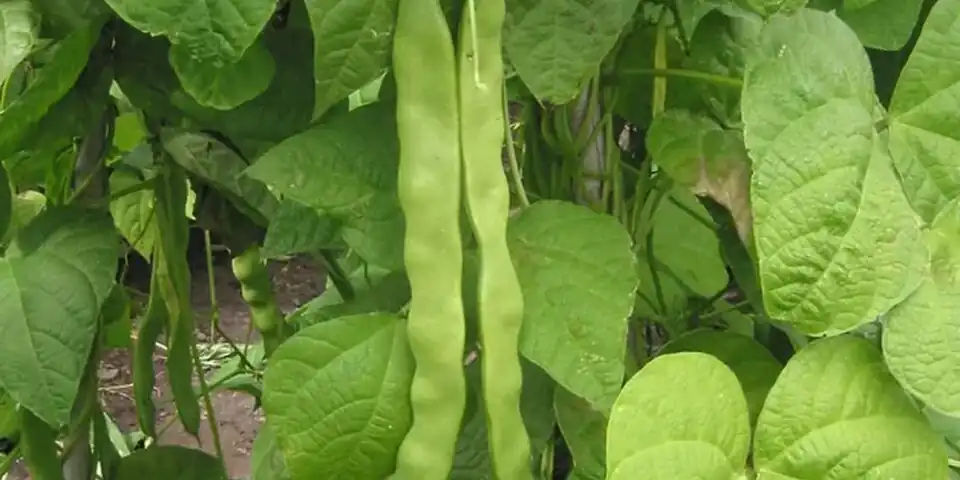
The classic version of this is the bean, and it's worth seeing on its own terms, because it's the mistake a calendar walks you into most reliably:
PromisingA warm-season bean germinates from warm soil, not from a calendar date; sown into cold ground it rots or emerges weak, even after the frost has passed.
suboptimal if ignored → advise
Mechanism: Warm-season legumes take up water fast at sowing (imbibition), and in cold soil that first rush of cold water injures the seed tissue before the seedling can establish - imbibitional chilling - so the seed rots or comes up damaged. Soil below about 15 C (60 F) at sowing depth is where this bites, and the frost-free date can arrive weeks before the soil is that warm.
Evidence: confirmed against 2 sources in the research-based literature.
the 2 sources
USU Extension, 'How to Grow Beans in Your Garden', extension.usu.edu/yardandgarden/research/beans-in-the-garden (read 2026-08-14): 'Beans are warm weather vegetables that require soil and air temperatures above 60°F for best germination and plant growth'; 'If you plant when soils are below 60°F, germination is greatly reduced'; 'Seedlings will emerge in 7-10 days when planted in soil that has warmed to 65-85°F.'
UMN Extension, 'Growing beans in home gardens', extension.umn.edu/vegetables/growing-beans (read 2026-08-14): 'Bean seed planted in cold soil may rot rather than germinate, and plant growth will be very slow in cooler weather'; 'Plant beans once the soil has warmed.'
remedy
Wait for the soil to warm - about 15 C (60 F) at sowing depth, which a soil thermometer reads in a minute - or start the beans in warm cells and set them out. Peas are the opposite and are out of scope here: half-hardy, they germinate in cold soil and are sown early on purpose.
Read the full rule → · open in the planner ↗
A warm-season seed takes up water fast the moment it's sown. In cold ground that first rush of cold water injures the seed tissue before the seedling can establish, and the soil fungi that rot seed are most at home in exactly those cold, wet conditions. So the seed doesn't germinate slowly - it rots. Waiting for the soil to reach the crop's range isn't fussiness; it's the difference between a stand and a gap.
Cool-season crops want the mirror image
None of this means "always wait for warmth". Cool-season crops - peas, lettuce, spinach, radishes - germinate in cool soil and are sown early on purpose; their range simply sits low, and holding them back for warm ground wastes weeks of the season they're built for. That's why the rule is "sow in the seed's range", not "sow when it's warm": the range is what differs from crop to crop.
How to read the ground
A soil thermometer pushed to sowing depth for a minute gives you the number, and it costs a few dollars. Check it in the morning, when the soil is at its coldest, and give a cold spell a few days to pass before you trust a warm reading. Each plant's page carries its germination range, so you can hold the number you measured against the number the crop needs - and sow the day the two line up, whatever the calendar says.