bulb ring suppresses turfgrass competition at the stem
Mechanism: Resource competition and physical occupancy of the root collar zone.
Evidence: settled without a trial - competition.
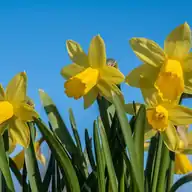
A perennial guild - a standing planting, not lifted between seasons.
The grape arbour's twin (O132 team 5, adopted 2026-09-02): the ring pattern around a trellised vine, with hardy kiwi's pair floor and structure from Penn State, Oregon State, Minnesota, Wisconsin and NC State, read 2026-09-02.
The corpus partly backs this planting with 2 graded mechanisms its members share:
At least 9 m²96.9 ft². A bed smaller than that does not get this guild quietly substituted for something else — the planner greys it out, says why, and offers the nearest adaptation that does fit.
The guild is the standing planting; it is not lifted at all.
Mechanism: Resource competition and physical occupancy of the root collar zone.
Evidence: settled without a trial - competition.
The vine is dioecious, so this arbour holds two vines, a male and a female of the same species, and a lone vine or two females sets no fruit; one male serves up to six females if you plant more. It is far heavier than a grapevine, up to 40 lb of fruit on a vine that can grow 30 ft in a year, so the structure is a stout arbour or T-bar on 4 to 6 inch posts, not a grape trellis. The understory stays a bulb ring at the posts because the canopy casts shade.
A role is filled by whatever satisfies its predicate, not by a fixed species list. The canonical filler is the default; the alternatives are priced.
Mechanism: A tree's root zone expands for a decade and extends well past the canopy edge.
Evidence: settled without a trial - root architecture.
Mechanism: Juglans roots exude hydrojuglone, oxidized to juglone, a respiration inhibitor. nightshades are highly sensitive: wilt and death.
Evidence: confirmed against 2 sources in the research-based literature.
UW-Madison / Wisconsin Horticulture (Joy, Hudelson & Jull, rev. 2024-02-28), 'Black Walnut Toxicity', hort.extension.wisc.edu/articles/black-walnut-toxicity (read 2026-07-13): 'Vegetables such as tomato, potato, eggplant and pepper ... are particularly sensitive to juglone'; 'The toxic effects of a mature black walnut tree can extend 50 to 80 feet from the trunk of the tree, with the greatest toxicity occurring within the tree's dripline.'
Iowa State Univ. Extension & Outreach, Yard and Garden FAQ, 'What plants are sensitive to the juglone produced by black walnuts?', yardandgarden.extension.iastate.edu (read 2026-07-13): juglone-sensitive plants include 'members of the tomato family (tomato, potato, eggplant, pepper).'
Plant it outside the walnut's root zone — the whole drip line and beyond. There is no soil treatment for juglone.
Mechanism: A dioecious species carries male and female flowers on separate plants: some plants make only pollen, others only fruit. A lone plant, or a planting that is all one sex, sets no fruit at all, because there is no pollen to reach the female flowers. Fruit needs at least one male plant near the fruiting females. This is a different mechanism from the single-locus self-incompatibility of apple and pear - there a plant has both sexes and rejects only its own pollen; here whole plants are one sex - so it is a separate rule, not a widening of that one.
Evidence: confirmed against 1 source in the research-based literature.
NC State Extension Gardener Plant Toolbox, 'Actinidia arguta', plants.ces.ncsu.edu/plants/actinidia-arguta/ (fetched in-container 2026-08-31; READ BY THE MAINTAINER 2026-09-01): 'A male and female plant is needed for fruit production' - the dioecy this rule fires on - with the self-fertile exceptions named on the same page ('Issai': 'Self-pollinating, lower growing cultivar'; 'Chang Bai Giant': 'May fruit without male, more abundant fruit when male present'), and named male pollinizers ('Ken's Red': 'Male, used as pollinator'; 'Meader': 'Male pollinizer...'). [read]
Plant at least one male alongside the female fruiting plant(s) - a single plant, or several of the same sex, will never fruit. A few named cultivars are self-fertile and need no separate male; if you grow one of those, one plant is enough.