Milpa Gardens
Sign in

Leer en español

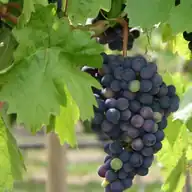
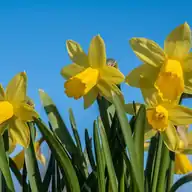
GrapeDaffodil

Grape arbor

A grapevine on an arbor, with a ring of daffodils at the posts and little else in the shade beneath it.

Why these plants work together

Here is how these plants help each other, with how sure we are of each:

Plan this plant team ›

Space it needs

At least 6 m²65 ft². If your bed is smaller, the planner grays this plant team out, says why, and offers the nearest adaptation that fits. It never swaps in something else without telling you.

What it looks like planted

The real placement. The drip-line rings need about 10 ft across, and the planner draws the same layout.

Between seasons

The whole planting stays in place year-round.

What it claims

Bulb ring suppresses turfgrass competition at the stem

A good hunch

How it works: Resource competition and physical occupancy of the root collar zone.

Evidence: checked against 3 sources in the research-based literature.

The 3 sources

pubs.ext.vt.edu

Virginia Tech, SPES-209 (Wolf and Giese, August 2020, reviewed December 2025)
… it is generally advisable to maintain an 18- to 24-inch weed-free strip in the intrarow for the first two or three years of vine growth.

extension.sdstate.edu

Currants: How to Grow It SDSU Extension
Mulch generously to keep the roots cool and moist, build soil organic matter, and discourage weeds (Figure 4).

extension.sdstate.edu

Gooseberry: How to Grow It SDSU Extension
Mulch generously to keep the roots cool and moist, build soil organic matter, and discourage weeds.

What to keep in mind

The grapevine needs a trellis or arbor, assigned here as its support, and casts shade once established, so the understory stays sparse, with a bulb ring at the posts and no full insectary. The arbor structure is the center of this team; the vine is trained onto it, so the structure stands where a tree would, which is how this team answers "a ring with no tree at the middle". A hardy kiwi arbor wants a male and a female vine, so plan on about 9 m² and a stouter structure than a grapevine needs; the vine is far heavier.

Who does what, and the swaps

Each job in this planting can be done by more than one plant. The usual choice comes first, and each swap says what it costs.

Canopy

Support

Bulb ring

Rules that decide where it fits

A tree or shrub plant team's ground is its drip-line ring, not a bed

Well established

If you skip this, it still grows, just less well. The planner suggests it.

How it works: A tree's root zone expands for a decade and extends well past the canopy edge.

Evidence: checked against 1 source in the research-based literature.

The source

extension.illinois.edu

Clearing misconceptions around tree roots Illinois Extension
… most of the roots are concentrated around the dripline

Read the full rule › · open in the planner ›

Don't plant anything sensitive to walnut toxin (juglone) within a walnut tree's root zone. Nightshades are sensitive, and so are apple and cabbage.

Well established

If you skip this, the planting fails. The planner won’t allow it.

How it works: Juglans roots exude hydrojuglone, oxidized to juglone, a respiration inhibitor. The nightshades are highly sensitive; they wilt and die.

Evidence: checked against 2 sources in the research-based literature.

The 2 sources

hort.extension.wisc.edu

Black Walnut Toxicity UW-Madison / Wisconsin Horticulture (Joy, Hudelson & Jull, rev. 2024-02-28)
Vegetables such as tomato, potato, eggplant and pepper ... are particularly sensitive to juglone

yardandgarden.extension.iastate.edu

What plants are sensitive to the juglone produced by black walnuts? Iowa State Univ. Extension & Outreach, Yard and Garden FAQ
… members of the tomato family (tomato, potato, eggplant, pepper).
Remedy

Plant it outside the walnut's root zone, which takes in the whole drip line and beyond. There is no soil treatment for juglone.

Read the full rule › · open in the planner ›

Some plants can't fruit from their own pollen, so they need a second plant of a different variety nearby.

Well established

If you skip this, you lose real yield. The planner warns you.

How it works: Many fruit trees carry self-incompatibility alleles at a single locus. When a pollen grain shares an allele with the pistil it lands on, the pistil rejects it and no seed sets. A plant's own pollen always shares its alleles, so it cannot fertilize itself. Neither can a second tree of the identical variety, which is genetically the same. Fertilization needs pollen from a genetically distinct plant.

Evidence: checked against 2 sources in the research-based literature.

The 2 sources

extension.psu.edu

Pollination Requirements for Various Fruits and Nuts Penn State Extension
Chestnut, Chinese: All are self-sterile. Two or more varieties or seedling trees are necessary to ensure adequate cross-pollination.

pmc.ncbi.nlm.nih.gov

Pollen-Pistil Interaction in Response to Pollination Variants in Subtropical Japanese Plum (Prunus salicina Lindl.) Varieties
Japanese plum exhibits gametophytic self-incompatibility (GSI), a prezygotic reproductive barrier where genetically related pollen is rejected by the pistil ... governed by a polymorphic locus (S) ... Self-incompatibility occurs when the same S-allele is expressed in the haploid pollen grain and the diploid pistil.
Remedy

Plant at least two, and where the species needs a second cultivar make them different varieties. Two of the same will not pollinate each other.
Read the full rule › · open in the planner ›

Where this plant team comes from

The ring pattern around a trellised vine, with a structure at the center.

Report a problem with this page

All plant teams