Milpa Gardens
Open the planner

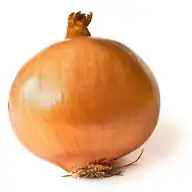
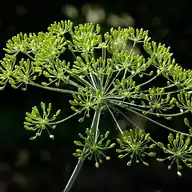
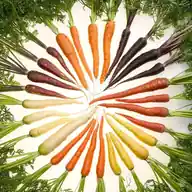
CarrotOnionDill

Carrot Onion And Dill

A polyculture - the species are claimed to help each other, and each claim below names its mechanism.

A derived composition (docs/PROPOSAL-35-combinations.md #22, adopted 2026-08-09), built to give the carrot rust fly mechanism a role-based expression: before this arc no guild contained carrot at all.

What binds this planting

The corpus partly backs this planting with 1 graded mechanism its members share:

Plan this guild →

Space it needs

At least 1 m²10.8 ft². A bed smaller than that does not get this guild quietly substituted for something else — the planner greys it out, says why, and offers the nearest adaptation that does fit.

What it looks like planted

The real placement, on an example 4 ft bed - the same layout the planner draws.

Between seasons

Nothing is left living in the bed over winter; the whole planting is re-established.

What it claims

alliums interplanted with carrots reduce carrot rust fly damage

A good hunch

Mechanism: The carrot rust fly finds its host by the smell of carrot foliage. Onion and other allium volatiles growing among the carrots mask that scent, so fewer flies locate the row to lay eggs. Because the protection is the smell, it lasts only while the alliums are in the ground — once they are pulled, the masking goes with them.

Evidence: confirmed against 1 source in the research-based literature.

the source

New England Vegetable Management Guide (regional land-grant extension), 'Carrot and Parsnip - Insect Control' (Carrot Rust Fly, Psila rosae), nevegetable.org/crops/carrot-and-parsnip/insect-control (read 2026-07-11): 'Intercropping with onion has been shown to reduce damage by carrot rust flies.' Listed among partial/suppression measures (with row covers and staggered planting), consistent with the 'modest' effect_size. The Guide does not state the post-harvest collapse; that is the masking mechanism, not a claim from this source.

Roles

A role is filled by whatever satisfies its predicate, not by a fixed species list. The canonical filler is the default; the alternatives are priced.

Primary

Companion

Border

What it costs the ground

Rotation history attaches to the ground, not the bed, so this is what the planner remembers about this patch after the guild comes out.

Rules that gate it

Promising

A guild deposits family history across its whole footprint.

costly if ignored → warn

Mechanism: Soilborne inoculum and overwintering pest stages disperse across the bed. A guild dominated by one family forecloses that ground for that family's rotation interval.

Evidence: confirmed against 2 sources in the research-based literature.

the 2 sources

Same soilborne-persistence basis as other rules here (read 2026-07-11): NC State Extension (Verticillium microsclerotia 'can survive in the soil without a host for up to 10 years'; Septoria/early blight 'overwinter on infected tomato debris and solanaceous weed hosts') and UMN/Ohioline (squash bug overwinters 'as adults in sheltered places ... they fly to growing cucurbit plants'; squash vine borer 'overwinters in the soil as a pupa').

Those sources establish that inoculum and pest stages persist in the ground and are not confined to the exact spot a plant occupied; this rule applies that persistence across the whole guild footprint. The whole-footprint attribution is the corpus's rotation geometry (history attaches to ground, not to the individual plant — see the data model), not a claim from an external source.

remedy

Rotate the whole bed the guild occupied, not just the rows that family grew in.

Read the full rule → · open in the planner ↗

Well established

Onion cultivar group must match site latitude.

fatal if ignored → block

Mechanism: Bulbing fires when daylength crosses a cultivar's critical threshold (short ~10-12h, intermediate ~12-14h, long ~14-16h). A short-day cultivar grown too far north crosses its low threshold early and bulbs prematurely on small plants, so bulbs stay small. A long-day cultivar grown too far south never reaches its high threshold and fails to bulb. Changeover is around the 35th-38th parallel.

Evidence: confirmed against 2 sources in the research-based literature.

the 2 sources

NC State Extension, 'Bulb Onions', content.ces.ncsu.edu/bulb-onions (read 2026-07-11): 'onions will not form bulbs until daylength reaches the cultivar's critical threshold. Short-day onions bulb at approximately 10-12 hours of daylength ... Intermediate-day onions bulb at approximately 12-14 hours ... Long-day onions bulb at 14-16 hours of daylength.'

Univ. of Illinois Extension (The Humble Gardener), 'Growing Onions in Central Illinois', extension.illinois.edu/blogs/humble-gardener/2018-03-19-growing-onions-central-illinois (read 2026-07-11): 'Long day varieties are for northern growing areas (above the 35th latitude); short-day varieties are for southern. If short-day varieties are grown in our zone, they won't do well. They will not form bulbs of any decent size. And since the long day onions need more daylight, they will not do well' (in the south).

remedy

Choose long-day onions in the north and short-day in the south; the planner picks the group from your plot's latitude.
Read the full rule → · open in the planner ↗

All guilds