Milpa Gardens
iniciar sesión

Traducción automática · Leer en inglés

Espárrago

Asparagus · Asparagus officinalis · familia de las asparagáceas · USDA PLANTS: ASOF

De un vistazo

Luz
Pleno sol
Helada
Resistente
Distancia
30 cm12 in
Zona de rusticidad
2–9
En esta página

Las reglas y las notas de cosecha de esta página están traducidas automáticamente del inglés; sus fuentes, algunas notas y los títulos de las guías siguen en inglés.

Espárrago (Asparagus officinalis) es una planta perenne (familia de las asparagáceas).

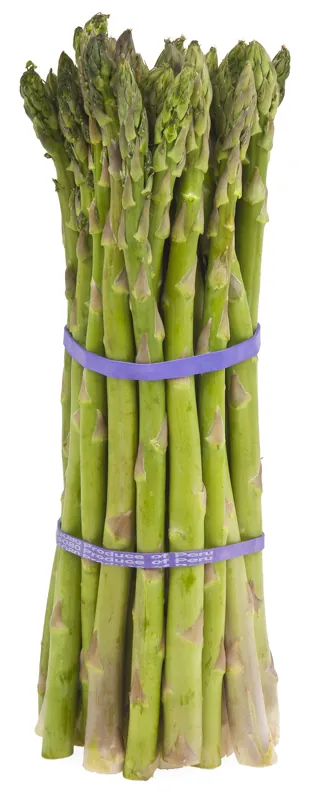
A bundle of green asparagus spears
Photo: Evan-Amos · CC BY-SA 3.0, via Wikimedia Commons.

¿Cuándo siembro esto? →

Planéala en tu huerto →

Los números

Distancia en el surco
30 cm12 in
Altura adulta
91–152 cm36–60 in
Ancho adulto
46–91 cm18–36 in
pH del suelo
6.2–7
Años hasta dar fruto
2
Zona de rusticidad
2–9
Luz
Pleno sol
Nutrientes
Moderadamente exigente
Profundidad de la raíz
Profunda
Tolerancia a la helada
Resistente
Ciclo de vida
Perenne
Forma de crecer
Mata
Valor para los polinizadores
Bajo
Da sombra a las plantas vecinas
Sí

Antes de sembrar

Lo que la semilla necesita antes de brotar.

Temperatura del suelo para germinar
16–29 °C61–84 °F
Días para germinar
10–24 días

OSU Extension, J. F. Harrington 'Soil temperature conditions for vegetable seed germination', extension.oregonstate.edu/gardening/soil-compost/soil-temperature-conditions-vegetable-seed-germination (published 2013, reviewed 2024; fetched in-container 2026-09-20, read by the maintainer 2026-09-20 via the batch-3 germination review): the Asparagus row gives minimum 50 F, optimum range 60-85 F, optimum 75 F, maximum 95 F. Stored is the OPTIMUM RANGE 60-85 F = 16-29 C; the 95 F maximum is the failure edge and is not stored. Harrington gives an explicit soil temperature, so the field is unflagged. No pre-sow soak or scarification is recorded for asparagus. [read]

OSU Extension, Harrington table (same page and fetch as germination_soil_temp_c; read by the maintainer 2026-09-20): 'days to seedling appearance' at 0.5 inch depth for Asparagus reads 50 F -> 53 days, 59 F -> 24, 68 F -> 15, 77 F -> 10, 86 F -> 11, 95 F -> 19, with little or no germination at or below 41 F. Stored [10, 24] spans the fastest (77 F) to the cool-end (59 F) of the optimum band; asparagus is a notably slow germinator, which the 53-day figure at 50 F underlines. [read]

Números de los que estamos menos seguros

These are estimates from general gardening knowledge, or the sources disagree on them, so treat them as a starting point rather than a firm figure.

Reglas que se aplican a Espárrago

Bien establecido La zona de rusticidad es la variable correcta para las perennes, y solo para las perennes.
Bien establecido

La zona de rusticidad es la variable correcta para las perennes, y solo para las perennes.

si no se sigue, igual funciona, pero peor · el planeador lo sugiere

Mecanismo: Las zonas codifican la temperatura mínima invernal media anual, que determina si una perenne leñosa sobrevive hasta la primavera. Es la magnitud equivocada para una anual, que nunca llega a ver el invierno. Una zona demasiado cálida es un segundo mecanismo, distinto. Los inviernos suaves no matan a una perenne; no le dan el frío que necesita. Los frutales caducifolios necesitan un periodo de latencia invernal para brotar y dar fruto, así que en una zona más suave que aquella a la que está adaptada una planta, esta puede sobrevivir y nunca producir. Solo se aplica el extremo frío, porque solo la supervivencia invernal se deduce de lo que mide una zona; el extremo cálido es un consejo, no un rechazo. Ese límite cálido pertenece a la variedad, no a la especie, y ese es el límite honesto de lo que esta regla puede hacer. El requisito de frío se publica por variedad y varía muchísimo dentro de una especie, así que un techo a nivel de especie dice "el rango modelado no llega a tu zona", nunca "ninguna planta de este tipo te dará cosecha". Por eso, por encima de su rango, el planificador sigue ofreciendo la planta, con el consejo de elegir una variedad clasificada para tu zona, en lugar de rechazarla.

Evidence: confirmed against 3 sources in the research-based literature.

the 3 sources

THE FLOOR IS TRUE BY DEFINITION and needs no citation: the USDA system defines a zone AS a band of average annual minimum winter temperature, so 'a plant colder-hardy than your zone survives your winter' is the definition restated. This rule was `verified_trivially` on that basis alone until 2026-07-26. THE CEILING WAS NEVER COVERED BY IT - a minimum-temperature definition says nothing about a plant failing for want of chill - and that gap is why ISSUES #13 exists. The pointer below closes it.

OSU Extension EC 1303, 'Growing blackberries in your home garden' (Bernadine Strik), catalog.extension.oregonstate.edu/sites/catalog/files/project/pdf/ec1303.pdf (read 2026-07-26). THE CEILING'S MECHANISM, STATED: 'Winter cold-hardy cultivars adapted to the colder regions of Oregon (such as zones 5 to 7), may not grow normally in regions of the Willamette Valley (zone 8) where winters are warmer and plants receive less winter chill.' A plant failing in a WARMER zone for want of chill - which is what this rule's upper bound enforces and what no source said until now. THE SAME PAGE MAKES IT A CULTIVAR PROPERTY: 'Even cultivars within the same type (trailing, erect or semierect) differ in fruit quality and flavor, appearance, tolerance to pests, cold hardiness, and plant longevity', and the remedy it gives is the one this rule's rejection text now repeats: 'Minimize risk by choosing types and cultivars that are adapted to your hardiness zone.' The page then publishes a table of sixteen cultivars EACH WITH ITS OWN ZONE RANGE, which is the strongest available evidence that a species-level band is an approximation. [read]

WHAT THIS DOES NOT SETTLE (amended 2026-09-24). The mechanism is named, but the corpus carries ONE band per species where the source carries one per cultivar, so the warm limit is explained without being precise. That is why, since 2026-07-26, the planner treats the warm end as advice rather than a refusal: above a species' band it still offers the plant and says to look for a cultivar rated for your zone, never that nothing will crop. Every species band now records what its sources say, though most are still marked estimated.

Lee la regla completa → · abrir en el planeador ↗

Prometedor No coseches nada de espárrago el primer año después de plantar las coronas. Cuando empiece la cosecha - la segunda o la tercera primavera, según la fuente que sigas -, que sea corta: unas dos semanas el primer año de cosecha, no más de un mes, y luego deja crecer todos los turiones posteriores. A partir del cuarto año, la cosecha puede durar de ocho a diez semanas. Cuando termine la cosecha, deja que los turiones se conviertan en helechos y déjalos en pie: los helechos son lo que alimenta la corona para el año siguiente.
Prometedor

No coseches nada de espárrago el primer año después de plantar las coronas. Cuando empiece la cosecha - la segunda o la tercera primavera, según la fuente que sigas -, que sea corta: unas dos semanas el primer año de cosecha, no más de un mes, y luego deja crecer todos los turiones posteriores. A partir del cuarto año, la cosecha puede durar de ocho a diez semanas. Cuando termine la cosecha, deja que los turiones se conviertan en helechos y déjalos en pie: los helechos son lo que alimenta la corona para el año siguiente.

si no se sigue, igual funciona, pero peor · el planeador lo sugiere

Mecanismo: Cada turión sale de la energía almacenada en la corona, y los helechos son lo que vuelve a llenar esa reserva - la fotosíntesis del helecho se guarda bajo tierra para producir los turiones del año siguiente. Una plantación joven todavía está ampliando su sistema de almacenamiento en las raíces, así que cortar sus turiones quita los brotes que se habrían convertido en helechos, y quitar demasiados turiones debilita las plantas. La moderación en los años de establecimiento es lo que forma una corona lo bastante fuerte para dar una cosecha completa durante décadas.

Evidence: confirmed against 2 sources in the research-based literature.

the 2 sources

Univ. of Minnesota Extension, 'Growing asparagus in home gardens', extension.umn.edu/vegetables/growing-asparagus (read 2026-08-22): 'In the first spring, a year after planting the crowns, do not harvest any spears'; 'The second spring after planting crowns, if the plants were strong and healthy during the previous growing season, begin to harvest when the spears are six to eight inches long'; 'In the first year of harvest, only pick asparagus for two weeks'; 'The fern creates energy that will be stored in the underground portion of the plant to produce the following year's spears'; 'It is important to take care of the ferns even after harvesting to ensure good future harvests.'

Univ. of Illinois Extension, 'Asparagus' (Home Vegetable Gardening), extension.illinois.edu/gardening/asparagus (read 2026-08-22): 'Asparagus can be harvested the third year after planting crowns, but for no more than one month the first season'; 'The plant is still expanding its root storage system and excessive removal of spears weakens the plants'; 'During the fourth year and thereafter, the spears may be harvested from their first appearance in the spring through May or June (as long as 8 to 10 weeks).'

solución

Primer año después de plantar las coronas: no coseches nada y deja que todo se convierta en helecho. En el primer año en que sí coseches, cosecha solo durante unas dos semanas - un mes como máximo - y luego para. A partir del cuarto año, cosecha desde los primeros turiones hasta mayo o junio, unas ocho a diez semanas. Cada año, cuando termine la cosecha, deja que los turiones restantes se conviertan en helechos y cuídalos; son la cosecha del año siguiente que se está guardando.

Lee la regla completa → · abrir en el planeador ↗

Otras 121 reglas dependen de tu huerto y no de la planta — rotación de cultivos, fechas de helada, sol, distancia entre plantas y suelo. Velas todas.

Equipos de plantas que la incluyen

Cita esta página

Milpa Gardens. "Espárrago (Asparagus officinalis)." https://milpa.garden/es/plants/asparagus-officinalis/

A garden-planning corpus: every claim states its evidence grade and links its sources on the page. Cite it with the grade, and add the date you read it.

Todas las plantas